identify value
How Much Is Rose Medallion Worth? A Value Guide
Key Takeaways
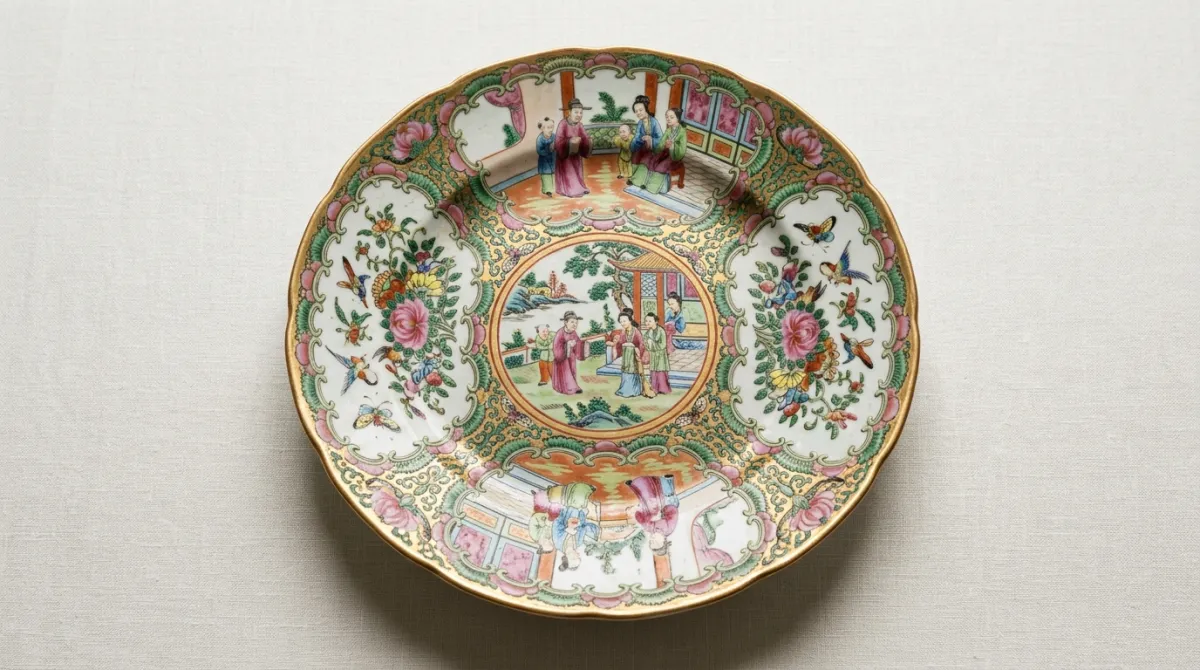
- There’s no single price for “Rose Medallion.” A mass-produced later plate and a finely painted early bowl both wear the same pattern name, and the gap between them can be significant.
- Painting quality is usually the biggest lever on value, more than a mark, more than a vague sense of “old,” and often more than most collectors expect going in.
- Condition problems, chips, hairlines, gilt wear, crazing, disguised restoration, pull value down, sometimes substantially, even on an otherwise desirable piece.
- Large or unusual forms (punch bowls, garden stools, big vases) tend to draw more interest than the small plates and teacups that survive in far greater numbers.
- For anything that might actually be significant, sold auction comparables and a qualified appraiser beat any online rule of thumb, including this one.
People ask Kerry to “just glance at a photo and tell them what it’s worth” more than she’d like, and she always gives the same gentle answer: it depends on more than a photo can show. I’ve sat next to her at the workbench often enough to know she means it. Value in Rose Medallion isn’t a lookup table. It’s a handful of factors that pull against each other, and getting a realistic read means understanding what those factors actually are, not chasing a single number.
Why does Rose Medallion value vary so widely?
Value varies widely because “Rose Medallion” describes a pattern, not a fixed period, maker, or quality tier, and both mass-produced and finely painted pieces carry the name honestly. A hurried 20th-century export plate and a large, exceptional 19th-century punch bowl can sit under the identical label, worlds apart in desirability.
That’s genuinely confusing for anyone new to the category, and understandably so. Most decorative patterns you’d research online come from a single factory or a tight date range, so a search turns up a fairly narrow answer. Rose Medallion doesn’t work that way. It’s been painted continuously for well over a century, by workshops of wildly different skill, for markets with different expectations at different times. (Marks and dating reference, Rose Medallion)
So when someone asks “what’s Rose Medallion worth,” the honest first answer is another question: which Rose Medallion? A small chipped saucer and a large, unrestored, beautifully painted charger aren’t really the same category of object, even though they’d both correctly be described with the same pattern name. Getting comfortable with that range is the first real step toward a sensible valuation, rather than a disappointing or an inflated one.
What actually drives the value of a Rose Medallion piece?
In Kerry’s experience and mine, five things matter most, painting quality, condition, form and size, genuine age, and rarity, though dealers weigh them differently and this is general market sense rather than a fixed formula. A large, finely painted, undamaged piece in an unusual form will typically outvalue a small, damaged plate even if the plate happens to be older.
Painting quality
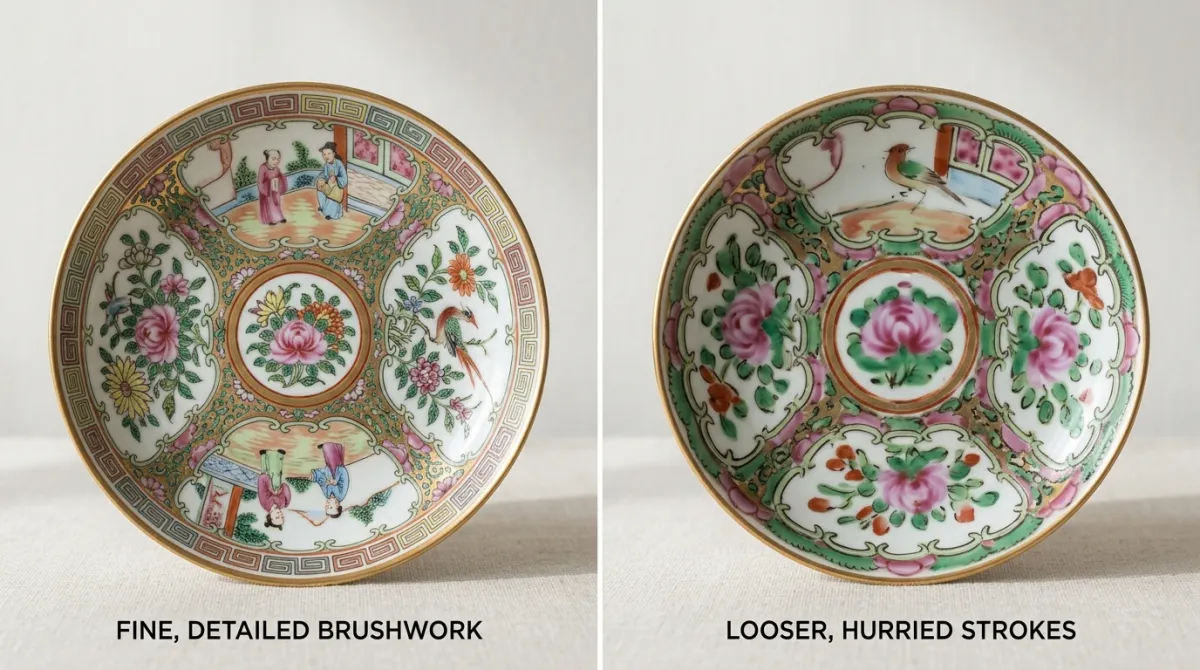
Painting quality is usually the single biggest factor. Reserves with confident brushwork, well-drawn faces, and rich, even color saturation command a real premium over crude or rushed examples from the same rough period. Two pieces can be roughly the same age and still land far apart in desirability, purely because one was painted by a more skilled hand than the other.
This is where a trained eye earns its keep. Kerry can usually tell within a few seconds whether a reserve was painted with care or knocked out quickly to meet a quota, and that read matters more to value than most people assume before they’ve had it explained to them. (Craft observation, Kerry Kwok, GoodTime Studio Macau)
Condition
Condition problems reduce value more than most new collectors expect, sometimes substantially, even on a piece that’s otherwise desirable in every other respect. Hairline cracks, chips (even small ones ground smooth and disguised), enamel loss, and heavy crazing all work against a piece, and skilled restoration generally still trails an untouched example in the same condition tier.
Isn’t it tempting to assume a “small” chip barely matters? It’s not quite that simple. A chip on a rim or foot is one thing; a hairline running through a painted reserve is another, and buyers and appraisers alike tend to weigh visible damage on the decoration itself more harshly than damage hidden along an edge.
Form and size
Form and size matter more than most people expect walking in. Large platters, punch bowls, garden seats, and unusual forms, tureens, matched pairs of vases, oversized chargers, tend to be genuinely scarcer than the small plates and teacups that survive in enormous numbers. Scarcity of form, not just age, pushes interest and desirability upward.
A garden stool or a big punch bowl in good condition will usually draw more attention than a common dinner plate of similar age and quality, purely because far fewer of the larger forms survived intact. If you want to see how form-specific value plays out in practice, our guides on Rose Medallion plates and Rose Medallion bowls cover the range within each shape.
Age and rarity
Genuine age adds value, but only once quality and condition are already established, not as a standalone trump card. An unremarkable, damaged 19th-century plate isn’t automatically worth more than a beautifully painted, undamaged early-20th-century one, and treating “older” as automatically “better” trips up a lot of new buyers.
Rarity compounds on top of that, matched pairs, complete sets, unusual reserves, or documented provenance from a known collection all add a layer of desirability beyond what age alone would suggest. (Market observation, Rose Medallion)
Why are reproductions worth so much less than fine antiques?
Later decorative reproductions are typically worth far less than genuinely antique, well-painted Rose Medallion, because they were made in volume for a mainstream decorative market rather than as one-off, carefully executed pieces. Whiter, more uniform bodies, brighter and more even gilding, and competent but mechanical enamel work are the usual tells.
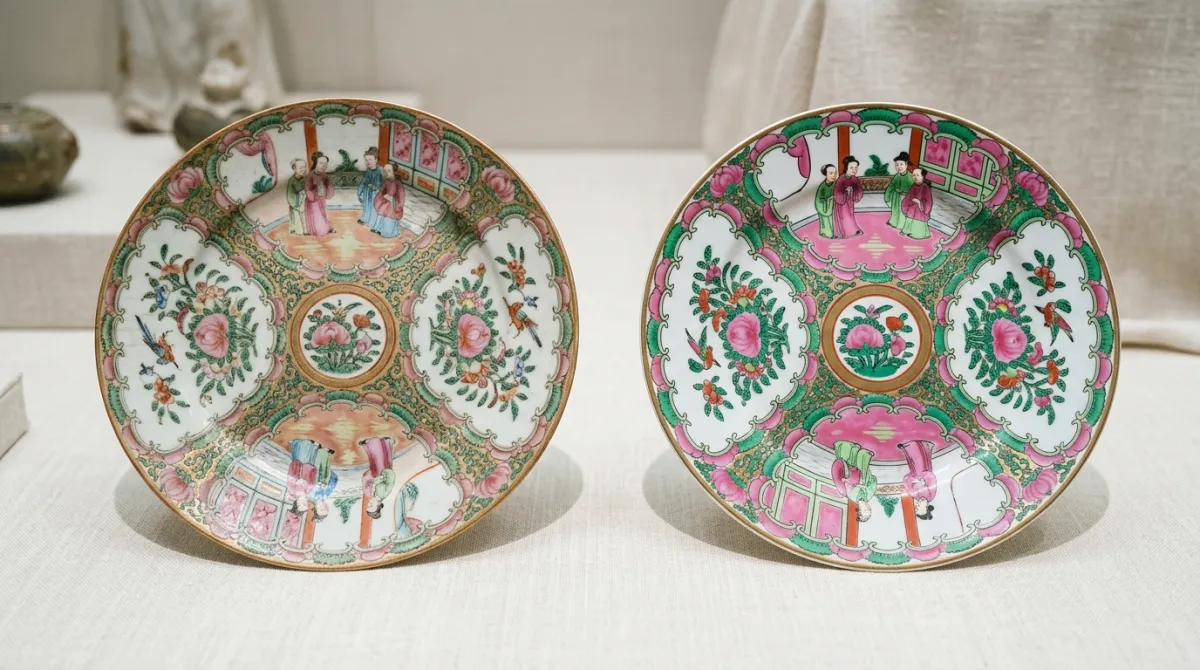
Documented 20th-century reproduction houses like Mottahedeh made honest, well-crafted decorative ware, not attempts to deceive anyone at the time. The trouble comes later, when a piece resells without its original context and gets mistaken, sometimes innocently, for something older than it is.
That mismatch between “decorative reproduction” and “significant antique” is exactly where value gets misjudged most often. Our full breakdown on how to identify Rose Medallion walks through the body, enamel, and gilding clues that separate the two, and it’s worth reading before you form an opinion on value at all. A piece can look lovely on a shelf and still be a modern decorative reproduction rather than an antique with meaningful value behind it.
How do you get a realistic valuation?
The most reliable approach is to look at recent sold auction results for comparable pieces, not asking prices, since asking prices reflect hope more than the market. Sold comparables for a similar form, size, painting quality, and condition give you a far more grounded sense of where a piece actually sits.
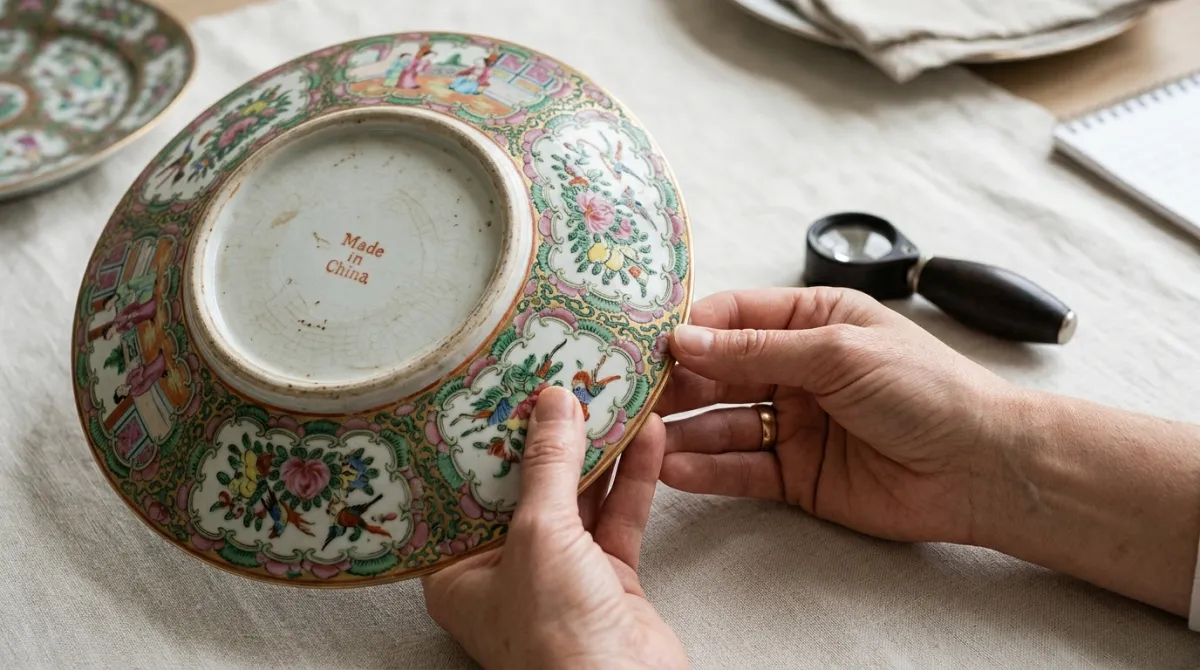
Auction houses with a track record in Chinese export porcelain, and qualified independent appraisers, are worth the time for anything that might be genuinely significant, a large or unusual form, exceptional painting, or a documented history. A short conversation with someone who handles this material regularly will tell you more than an hour of scrolling.
Be cautious of online “value guides” that lean on a single mark, a single photo, or a vague pattern match to hand out a confident number. Rose Medallion resists that kind of shortcut precisely because painting quality and condition matter so much, and neither comes through clearly in a quick online search. If you’ve got a piece you’re trying to place, reach out through our commissions page and we’re happy to take a look and talk through what we see, though for anything potentially significant, a qualified appraiser or auction specialist should always be part of the process too.
Setting realistic expectations for what you own
Most Rose Medallion on the market today is genuinely modest in value, and that’s simply the honest baseline most owners should start from. The category includes an enormous volume of later, competently but unremarkably painted export ware, and that’s most of what turns up at estate sales and in family collections.
Exceptional pieces, fine painting, unusual form, excellent condition, real provenance, do exist, and they’re the reason Rose Medallion has a real collector market at all. But they’re the exception, not the rule, and walking in expecting every piece to be one of those exceptional finds sets you up for disappointment more often than not.
Kerry’s advice to people who bring pieces to the studio is almost always the same: enjoy what you have for what it is first, and treat any significant valuation as a pleasant surprise rather than an assumption. That framing tends to hold up a lot better than the alternative. For the fuller picture on the pattern itself before you weigh value, our Rose Medallion complete guide ties history, identification, and care together in one place.
Frequently asked questions
How much is my Rose Medallion worth?
It depends on painting quality, condition, form and size, age, and rarity, weighed together rather than any single factor. There’s genuinely no fixed answer without seeing the piece, which is why sold auction comparables and a qualified appraiser matter more than a quick online guess.
Does an antique-looking mark increase value?
Not reliably. Reign marks on Canton export porcelain are frequently apocryphal and prove very little about actual age, so a mark alone shouldn’t move your value estimate much either way. Our guide to Rose Medallion marks covers what marks can and can’t tell you.
What’s the most valuable form of Rose Medallion?
Large or unusual forms, punch bowls, garden stools, big vases, and matched pairs, tend to draw more interest than small plates and teacups, largely because fewer of them survived intact. Painting quality and condition still matter just as much within any given form.
Where can I get Rose Medallion appraised?
Auction houses with a track record in Chinese export porcelain and independent, qualified appraisers are the most reliable route, especially for anything potentially significant. Ask them to reference recent sold comparables rather than relying on asking prices alone.
Does a chip or restoration hurt value?
Yes, generally. Chips, hairlines, enamel loss, and heavy crazing all reduce value, sometimes substantially, and even careful, skilled restoration usually still trails an untouched piece in comparable condition. Condition is one of the few factors buyers weigh almost as consistently as painting quality.
Value in Rose Medallion rewards patience more than speed. Look past the pattern name, weigh painting quality and condition honestly, and lean on real sold comparables rather than hopeful asking prices before you settle on what a piece is actually worth. And if a piece has you genuinely curious, there’s no harm in getting a second pair of trained eyes on it before you decide what to do next.
Keep exploring
More from Rose Medallion
Identification, history, and care guides for Rose Medallion and Canton porcelain. New guides added regularly.
Explore all guides