history origin
Antique Chinese Porcelain: A Beginner's Buyer's Guide
Key Takeaways
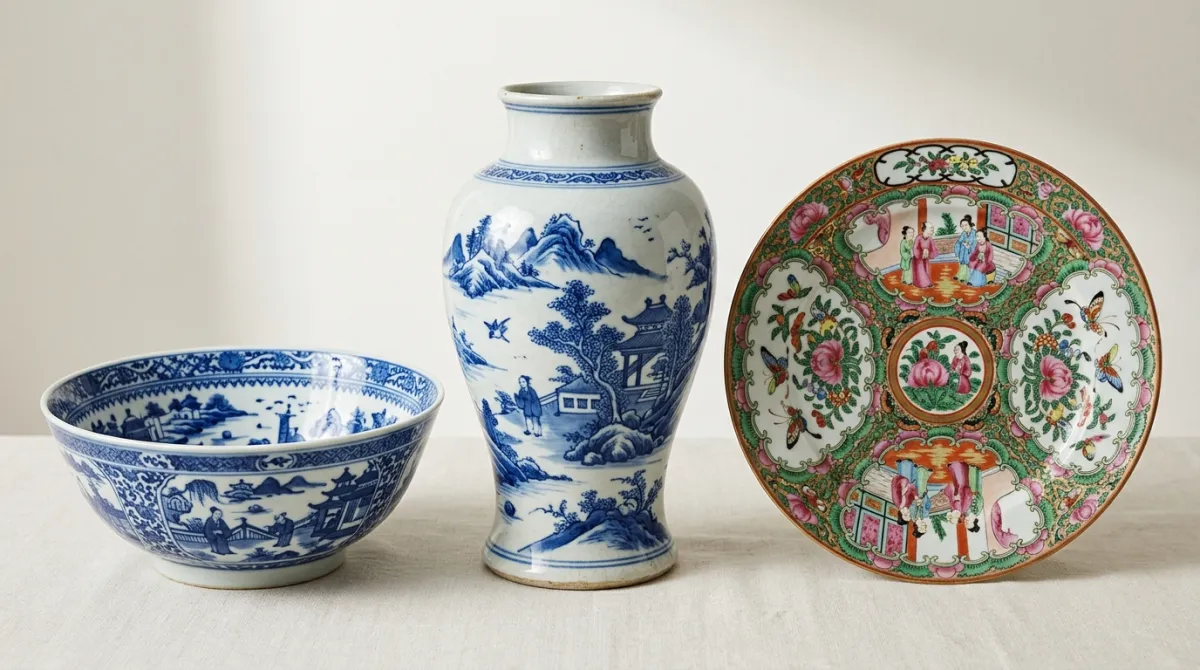
- Blue and white (青花), famille-rose export wares such as Rose Medallion (廣彩), and famille verte wares are the things most beginners encounter first; each developed for different markets and periods. See our blue and white porcelain guide and what is Rose Medallion porcelain.
- Buy what you love and can afford, and lean toward condition over rarity for your first few pieces. A well-preserved, modest plate teaches you more than a damaged rarity you’re afraid to touch.
- Reign marks are often apocryphal or missing entirely, so judge the whole object first, the body, glaze, enamels, gilding, and wear, before you ever flip a piece over. Our marks and dating reference and how to identify Rose Medallion walk through that in detail.
- Value tends to track painting quality, condition, age, and rarity of form together, not any single feature in isolation.
- Antique overglaze enamels and gilding can contain lead, so most collectors treat older pieces as decorative and display them rather than eating off them. Our cleaning and care guide covers safe handling.
I get some version of the same question a few times a year, usually from someone who’s just inherited a cabinet of porcelain or picked up a plate at an estate sale and wants to know what they’re actually looking at. There’s no single answer, because “antique Chinese porcelain” covers several centuries and at least three or four distinct traditions. What follows is the orientation I wish someone had handed me when I first started paying attention to what my wife Kerry does at her workbench.
What Types of Antique Chinese Porcelain Will You Come Across?
Most beginners run into three main families: blue and white underglaze ware, overglaze enamel export porcelain like famille rose and Rose Medallion, and the earlier famille verte palette. Each grew out of a different period and a different market, so knowing which family you’re looking at is usually the first useful step. (Chinese blue and white porcelain guide)
Blue and White (青花)
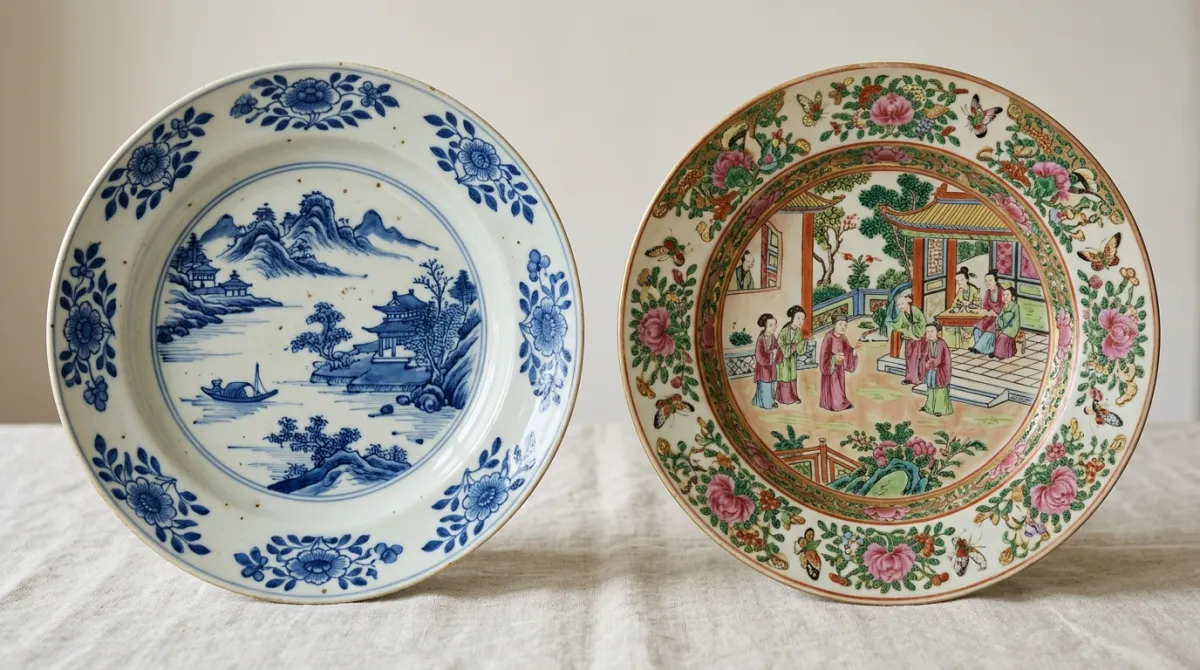
Blue and white is cobalt painted directly onto raw clay, then sealed under a clear glaze and fired in one pass. It’s the oldest of the traditions here, maturing under the Yuan dynasty and reaching a refined peak under the early Ming emperors, with large-scale export already well underway by the late Ming. Our full blue and white porcelain guide covers the Jingdezhen story and how to date a piece by cobalt tone and brushwork.
Famille Rose, Rose Medallion, and Canton Export (廣彩)
Famille rose is overglaze enamel work, painted onto the glaze after the first firing rather than under it, which gives the pigments a different range, including the characteristic opaque pinks associated with famille rose. Rose Medallion is one recognizable pattern within that broader Canton export tradition, built around alternating panels of court figures, birds, and peonies. Kerry paints this style at her studio and has strong opinions about what separates a careful hand from a rushed one; our Rose Medallion overview is the deeper read here.
Famille Verte and Other Palettes
Famille verte came earlier than famille rose, built around a dominant green enamel rather than pink, and it’s worth knowing the name even if you don’t collect it specifically. Plenty of beginners see a green-toned antique piece and assume it must be a variant of Rose Medallion; it’s a separate, earlier palette with its own conventions. Distinguishing the two takes a little practice, but the color balance alone is usually enough once you’ve seen both side by side.
Canton Export Ware, More Broadly
“Canton” export ware is a wider label for porcelain painted in and around Guangzhou for foreign buyers, decorated on plain white blanks shipped down from Jingdezhen. Rose Medallion sits inside that broader category, but so do plainer armorial services and other export patterns you’ll come across at auction. It’s worth treating “Canton export” as an umbrella term rather than a single style.
How Do You Start Collecting Antique Chinese Porcelain?
Start with a piece you genuinely like, at a price you can absorb without regret, rather than chasing whatever a price guide calls rare. Beginners who buy on instinct tend to stay interested longer than beginners who buy on spreadsheets, and staying interested is most of what builds real knowledge over time.
Set a budget before you start looking, not after you’ve fallen for something. It’s tempting to stretch for a piece that feels special, and sometimes that’s fine, but a firm number keeps you from talking yourself into damage or a doubtful attribution just because you’re already emotionally committed.
Favor condition over rarity for your first several purchases. A common pattern in excellent shape, with its enamels intact and no hidden repairs, will teach you more about how genuine old porcelain looks and feels than a rare but heavily restored piece you’re too nervous to handle. You can chase rarity later, once your eye has some mileage on it.
As for where pieces actually change hands: regional auction houses, established antiques dealers, estate sales, and reputable online marketplaces are the four channels most collectors use. Each has tradeoffs. Auctions often have condition reports and expert cataloguing but move fast; dealers can talk you through a piece but carry a retail markup; estate sales can turn up surprising finds but with essentially no guarantees; online listings widen your options enormously but make in-hand inspection impossible before you buy. Handling pieces in person, whenever you can, teaches you things photographs never will.
How Do You Avoid Buying a Fake?
Judge the whole object together, body, glaze, enamel or cobalt quality, gilding, and wear, rather than leaning on any single feature. Reign marks in particular are a weak signal on their own: many were added generations after the reign they name, or copied as a mark of respect rather than a claim to date, so a mark alone proves very little.
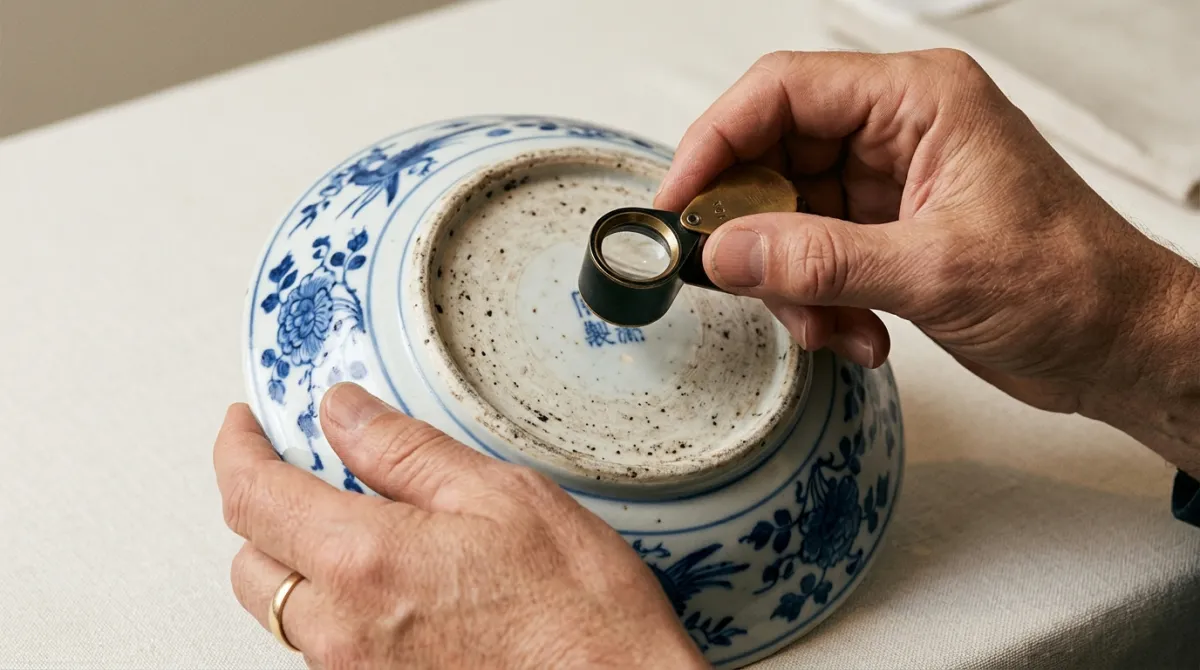
That’s not a small caveat, either. It surprises a lot of people the first time they hear it, and it’s worth sitting with. A “Qianlong mark” on the base doesn’t mean Qianlong-era production; it might mean a later potter honoring an earlier emperor’s reputation, which was a genuinely common practice. Our marks and dating reference goes through why marks mislead so often and what they can still tell you when read carefully.
Instead, look at the body and glaze first. Hand-painted enamels sit slightly proud of the glaze surface and show small brush ridges and natural variation from one repeated motif to the next; transfer-printed or heavily restored decoration tends to lie flat and repeat with a uniformity no hand achieves. Gilding that’s genuinely old usually shows soft, honey-toned wear at rims and handle points, the kind that comes from decades of actual handling rather than tumbling or artificial distressing.
Our how to identify Rose Medallion guide walks through this process piece by piece, with the checks Kerry actually uses at her own workbench. None of these clues works alone. Read them together, and be honestly comfortable with some uncertainty; even specialists hedge on borderline pieces.
Judging Value: Painting Quality, Condition, Age, and Rarity
Painting quality, condition, age, and rarity of form tend to move together in how a piece is valued, rather than any one of them deciding the price by itself. Two plates from the same period and pattern can sell for very different amounts once you factor in how carefully each was painted and how well it survived the last century or two.
Painting quality is the one beginners underrate most. A confidently drawn face, a petal that thickens and tapers the way a real brushstroke does, consistent but not mechanically identical figures across panels, these separate a strong piece from a mediocre one even within the same period and pattern. Kerry can usually tell within a few seconds whether a painter was rushing a commission or taking real care, just from how a single sleeve or feather is handled.
Condition matters almost as much. Chips, hairline cracks, professional restoration, and enamel loss all pull value down, sometimes sharply, even on an otherwise desirable piece. Rarity of form, an unusual shape, a larger-than-typical size, a pattern variant that doesn’t turn up often, adds a further premium on top of all that, but rarity without quality or condition rarely commands what beginners expect it to.
Is antique Chinese porcelain a good investment? Treat that question carefully. Values shift with taste, condition, and market demand over time, and nobody can promise appreciation on a specific piece. Buy what genuinely interests you and you’ll enjoy owning it regardless of where prices move.
Caring for Antique Porcelain at Home
Hand-wash antique porcelain gently, and treat older overglaze pieces as decorative rather than everyday tableware. Antique enamels and gilding can contain lead, a fact of period manufacturing rather than any specific maker’s fault, so most collectors display these pieces rather than eating or drinking from them regularly.
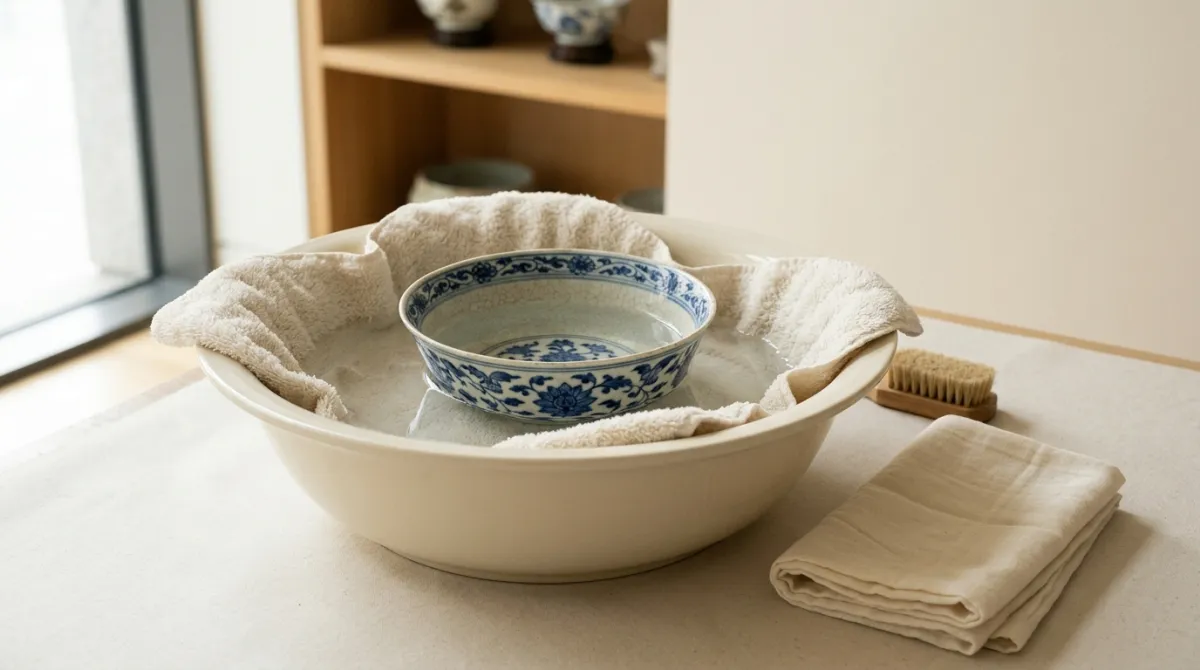
Warm water, a soft cloth, and mild soap are usually enough for routine cleaning; skip the dishwasher and harsh abrasives, both of which can dull gilding and lift enamel over time. Our full cleaning and care guide covers safe handling in more depth, including what to do (and not do) with pieces that already show wear or minor damage.
Display antique pieces somewhere stable, out of direct sun and away from heat sources as a general precaution, and away from the edge of a shelf where a stray elbow can end a century of survival in a second. It sounds obvious until it happens to someone you know.
Frequently asked questions
How do I know if my Chinese porcelain is antique or a reproduction?
Look at the whole piece: enamel texture, gilding wear, glaze tone, and weight, rather than the mark alone. Hand-painted decoration shows brush texture and natural variation; reproductions often look too flat or too uniform. See our how to identify Rose Medallion guide for the specific checks.
Do I need to read Chinese to identify reign marks?
Not really, and marks alone can mislead you anyway. Many marks are apocryphal, added generations after the reign they name, so they’re rarely a reliable dating tool on their own. Our marks and dating reference explains what marks can and can’t tell you.
What’s the difference between blue and white and famille rose?
Blue and white is underglaze cobalt, painted before the final glaze and firing; famille rose (including Rose Medallion) is overglaze enamel, painted on top of the glaze after that first firing. They also come from different eras and, often, different markets. Our blue and white porcelain guide has the fuller comparison.
Is antique Chinese porcelain a good investment?
Treat it as a qualitative bet, not a guaranteed one. Values move with condition, rarity, painting quality, and shifting taste, and no single feature guarantees appreciation. Buy pieces you genuinely want to live with, and any value increase becomes a bonus rather than the point.
Is antique Chinese porcelain safe to eat off?
Most collectors treat antique pieces as decorative rather than functional, since older overglaze enamels and gilding can contain lead. Display is the safer default for anything genuinely old; our cleaning and care guide covers handling in more detail.
Where to Go From Here
Antique Chinese porcelain rewards patience more than quick judgments. Start with a type that appeals to you, whether that’s the confident cobalt of blue and white or the layered enamel panels of Rose Medallion, and let your eye build up gradually from handling real pieces rather than memorizing rules. Our Rose Medallion pillar guide is a good next stop if that pattern is the one that’s caught your interest. And if you’d rather commission a hand-painted piece in that same tradition than hunt for an antique one, Kerry takes on a limited number of custom commissions each year at GoodTime Studio Macau.
Keep exploring
More from Rose Medallion
Identification, history, and care guides for Rose Medallion and Canton porcelain. New guides added regularly.
Explore all guides