care display
How to Clean and Display Antique Rose Medallion
Key Takeaways
- Hand-wash only, lukewarm water, mild soap, soft cloth; no dishwasher, ever.
- Overglaze enamels and gold sit on top of the fired glaze, so abrasives, citrus, and hard scrubbing lift them off.
- Never soak a piece that has an old rivet repair or a hairline crack.
- Keep pieces out of direct sun and away from heat vents; use padded plate stands, not tight metal clips.
- Flaking enamel or a fresh crack means it’s time to call a conservator, not reach for glue.
Why does old Rose Medallion need gentler care than modern china?
Because the decoration isn’t fired into the glaze the way most factory dinnerware is today. On antique Rose Medallion, the famille rose enamels and gold rim were painted on after the piece was already glazed and fired once, then fixed with a second, much cooler firing. That lower temperature never lets the colors fuse into the surface the way the base glaze did.
Kerry Kwok, a Macau porcelain painter who studied under 廣彩 (Canton enamel) master Lei Iat Po and now runs her own studio, describes it plainly: overglaze enamel is essentially paint sitting on glass. She works with the same pigments and gold size every week at GoodTime Studio Macau, and she says the low-fire enamels used on 19th and early 20th century export porcelain were never meant to survive decades of dishwasher cycles or bleach soaks. They were meant to survive a gentle wipe.
That distinction matters for anyone who owns a piece and wants to actually use it, not just display it behind glass. The enamel isn’t fragile because it’s old. It’s fragile because of how it was made in the first place, and that was true the week it left the kiln.
If you’re not yet sure whether what you own is genuine Rose Medallion or a later reproduction, it’s worth starting with how to identify Rose Medallion before you commit to a cleaning routine, since some later, higher-fired reproductions can tolerate more handling than the real thing.
What’s the safest way to hand-wash a piece?
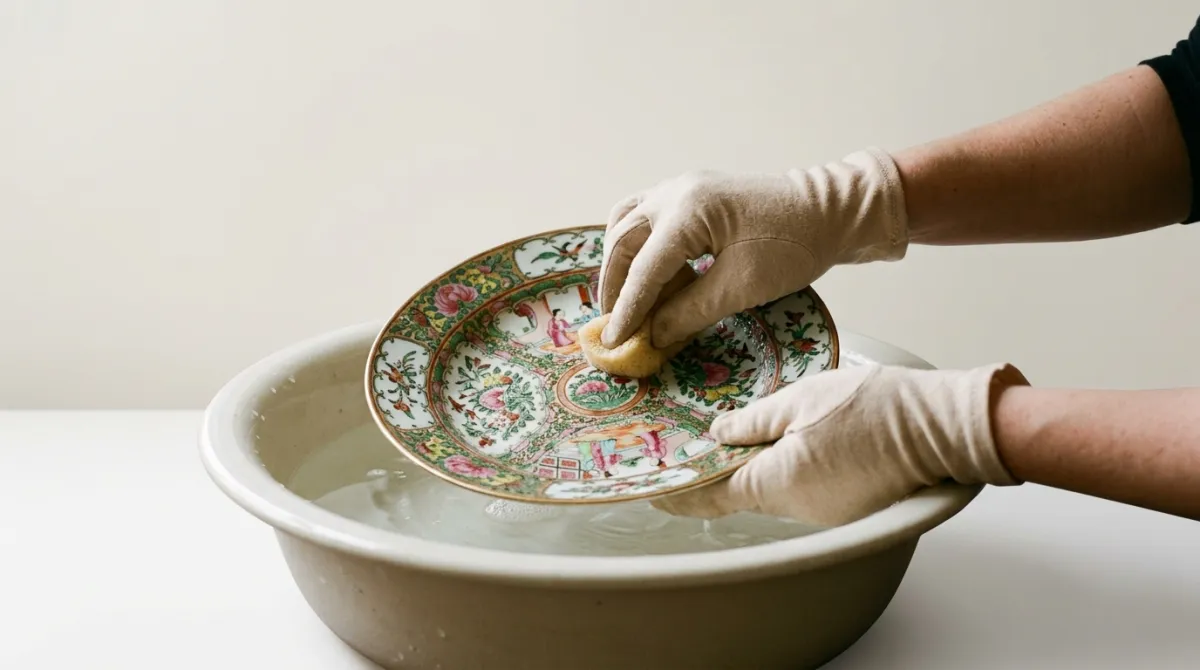
Wash one piece at a time in a plastic basin lined with a towel, using lukewarm water and a drop of mild, unscented dish soap. Never run hot water over cold porcelain, and never let two glazed pieces knock together in the sink, since even a light chip can start at the rim.
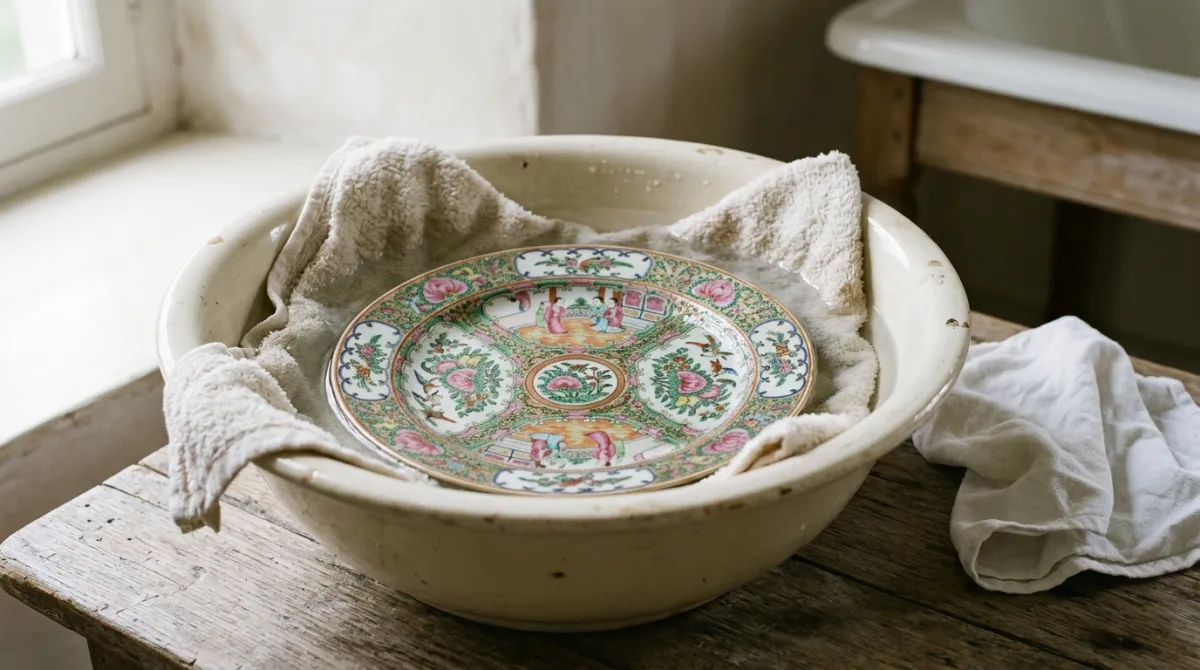
Fill the basin first, then lower the piece in, rather than washing it under a running tap. This keeps handling gentle and minimizes the chance of a knock against the faucet or sink while the piece is wet and slippery. Swirl gently with your hand or a very soft cloth, paying attention to the rim and any painted medallions, which are usually the highest-relief and most exposed decoration on the piece.
Skip sponges with a scrubby side, steel wool, and anything labeled “non-scratch” on the box. Those pads are engineered for baked-on grease, not the low-fired gold found on antique porcelain. A soft, well-worn cotton cloth or a piece of microfiber does the job with none of the risk.
Rinse in a separate basin of plain lukewarm water rather than under the tap, then set the piece on a towel and pat, don’t rub, dry with a soft cloth. Let it air-dry the rest of the way before you put it back on a shelf or stand.
Why is the dishwasher such a problem for antique porcelain?
Dishwashers combine three things overglaze enamel can’t handle at once: sustained heat, harsh detergent, and water jets under pressure. Any one of those alone can dull gilding; together, over a few cycles, they can strip gold rims down to bare glaze and leave enamel colors looking chalky and thin.
Detergent and mechanical abrasion are the bigger everyday risks. Dishwasher detergent is chemically harsh on low-fired gold and enamel, and the water jets add friction a hand-wash never does, especially on a piece with an old rivet repair or decoration that’s already compromised. Heat may add to the strain too: dishwasher cycles run far hotter than a hand-wash, and some conservators think repeated heating and cooling can contribute to crazing (the fine network of hairline cracks you sometimes see in old glaze), though detergent and handling damage tend to show up first.
Detergent is formulated to strip grease and food residue, and it doesn’t distinguish between that and low-fired gold. Kwok has seen customer pieces brought into her studio for touch-up work where the gold band had gone from bright to nearly invisible after regular dishwasher use, something she says is one of the most common and most preventable forms of damage she’s asked to repair.
Can Rose Medallion go in the dishwasher? No. Hand-wash only, every time, no exceptions for “just a quick rinse cycle.”
How should you handle and store pieces day to day?
Handle Rose Medallion by the body of the piece, not the rim, since the rim is where gilding and enamel decoration take the most contact wear over time. This one habit prevents more gradual gold loss than any cleaning product ever will.
When you pick up a plate, cradle it from underneath with one hand and steady the edge lightly with the other, rather than pinching the rim between two fingers. For cups, lift by the body and support the base; old handles, especially on famille rose teacups, are a common failure point and shouldn’t bear the full weight of the piece on their own.
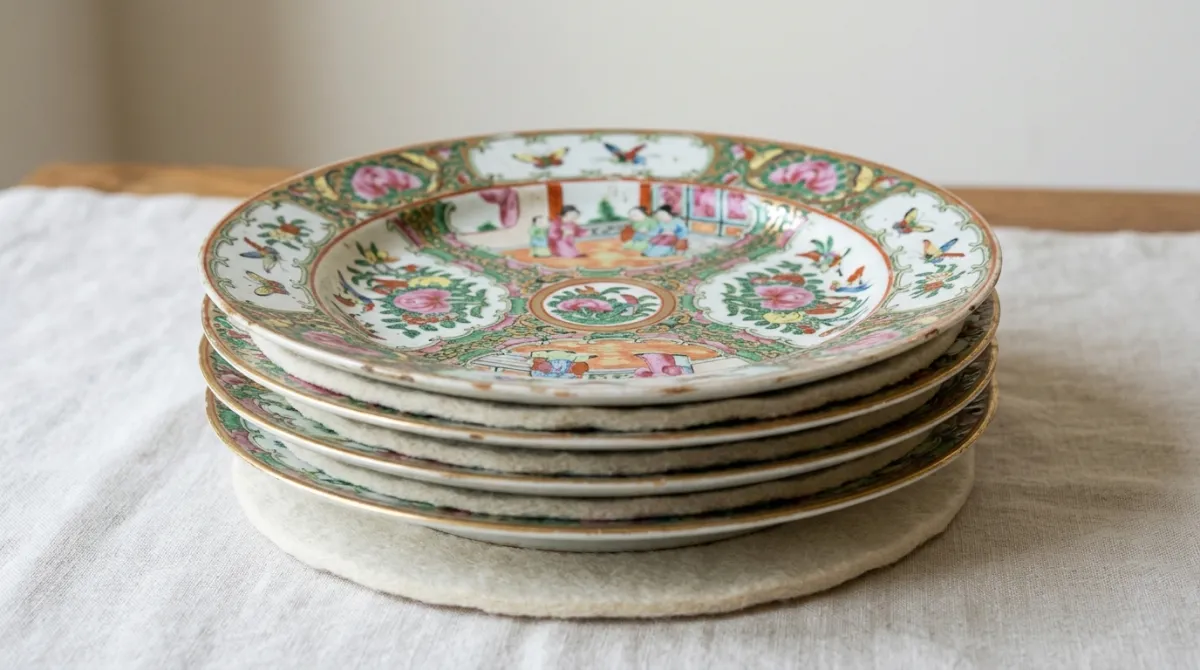
If you’re stacking plates for storage, never let glaze touch glaze directly. Place a round of felt, a soft cloth, or acid-free tissue between each plate so painted surfaces and gold rims don’t rub against one another. Even a small amount of grit between two stacked plates can scratch through gold in a single lift. If you’re caring for a full collection, the main guide pulls handling, dating, and display together in one place.
What’s the best way to display antique Rose Medallion?
Keep displayed pieces out of direct sunlight and away from radiators, vents, or fireplaces, since sustained heat and thermal cycling put more strain on old glaze and any prior restoration than sunlight alone. Direct sun is still worth avoiding as a general precaution, but heat is the bigger long-term concern. A north-facing shelf or a cabinet away from a sunny window is a safer long-term home than a mantel that catches afternoon sun.
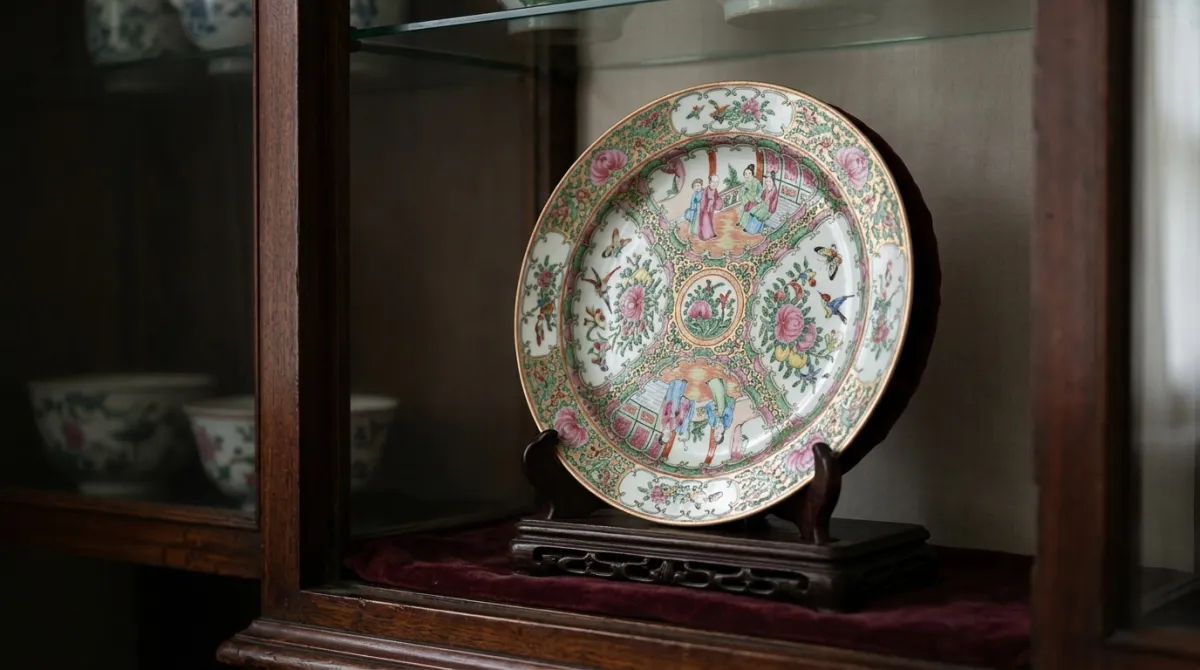
Choose plate stands with a padded or coated wire, not bare metal that pinches directly against the rim. A too-tight stand can put constant pressure on a spot that may already carry a hairline crack you can’t see. Look for stands with an adjustable, cushioned grip, and never force a plate into a stand that’s slightly too small.
For cabinets, avoid packing pieces so tightly that they touch. Porcelain expands and contracts slightly with temperature changes, and pieces jammed together can chip each other over months of small vibrations from foot traffic or a closing door nearby.
If a piece is damaged, a professional conservator is the right next step, not a repaint (see the section below). If you’d simply like a new piece to round out your display, GoodTime Studio Macau’s commission work hand-paints new pieces to complement an existing collection.
When should you stop cleaning and call a conservator instead?
Stop and call a professional conservator if you see flaking or lifting enamel, a new crack, or any sign of old restoration work like a metal rivet or visible glue line, since cleaning around active damage can make it worse. Kwok says the pieces that come into her studio in the worst shape are almost always ones an owner tried to “fix” first with superglue or a home epoxy kit.
Rivet repairs, common on Chinese export porcelain from before modern adhesives existed, are a particular hazard. Never soak a riveted piece; water trapped around old metal rivets can encourage rust staining that spreads into the surrounding glaze and is very hard to remove afterward.
A hairline crack you can feel with a fingernail, even if you can barely see it, is a sign the piece needs dry handling only, no washing, until a conservator has looked at it. Don’t attempt DIY repair or adhesive fixes on antique porcelain. A poorly matched glue can be more visible, and more costly to reverse, than the original chip ever was.
Frequently asked questions
Can Rose Medallion go in the dishwasher?
No. Antique gilding and overglaze enamels are damaged by dishwasher heat and detergent. Hand-wash only.
Is it safe to use vinegar or lemon juice to clean stains?
No. Acidic cleaners like vinegar and citrus juice, and strongly alkaline ones too, may affect gilding, old restorations, and vulnerable overglaze enamel, since both sit on top of the fired glaze rather than fused into it. Stick to mild soap and lukewarm water instead.
Can I soak a Rose Medallion piece to loosen stuck-on grime?
Generally, avoid routine soaking of decorated antique porcelain unless you know the piece’s condition is stable, with no repairs, rivets, or hidden cracks. Soaking a riveted or cracked piece traps water that can cause rust staining or widen hairlines. When in doubt, wipe rather than soak.
How do I clean the gold rim specifically?
Treat it exactly like the rest of the piece: a soft cloth, mild soap, lukewarm water, gentle pressure. Never use metal polish or a jeweler’s cloth meant for silver, since those are far too abrasive for low-fired gold.
Does a piece need to be museum-quality before it’s worth caring for this carefully?
No. Everyday family pieces benefit just as much from gentle handling as museum pieces do, and small habits like supporting the body rather than the rim add years of use to any piece you actually plan to enjoy at the table.
A last word on everyday care
None of this is complicated once it’s habit: lukewarm water, a soft cloth, no dishwasher, no soaking a repaired piece. What it does require is a little patience and a willingness to handle a plate the way someone would have handled it a century ago, carefully, by hand, one piece at a time. Do that, and there’s no reason a well-loved Rose Medallion piece can’t stay on your table, and in your family, for another century.
Simon Iong writes about Rose Medallion history and care. Craft insight in this piece comes from Kerry Kwok of GoodTime Studio Macau, a working 廣彩 painter trained under master Lei Iat Po.
Keep exploring
More from Rose Medallion
Identification, history, and care guides for Rose Medallion and Canton porcelain. New guides added regularly.
Explore all guides