patterns motifs
Rose Medallion Planters and Jardinières: A Collector's Guide
Key Takeaways
- A jardinière is a decorative planter; a cachepot is an outer pot meant to hide a plain nursery pot, and most cachepots have no drainage hole at all.
- Check whether a piece actually drains before you plan to use it with soil, since most antique Rose Medallion planters weren’t built for that.
- Planters and jardinières were often produced in pairs for fireplace mantels or entryways, and a genuine matched pair tends to be harder to find, and worth more, than two singles.
- Value comes down to size, pairing, painting quality, and condition read together, not any single feature on its own.
- If soil, drainage, or a very particular size matters more than an antique’s history, a hand-painted custom planter is often the more practical route.
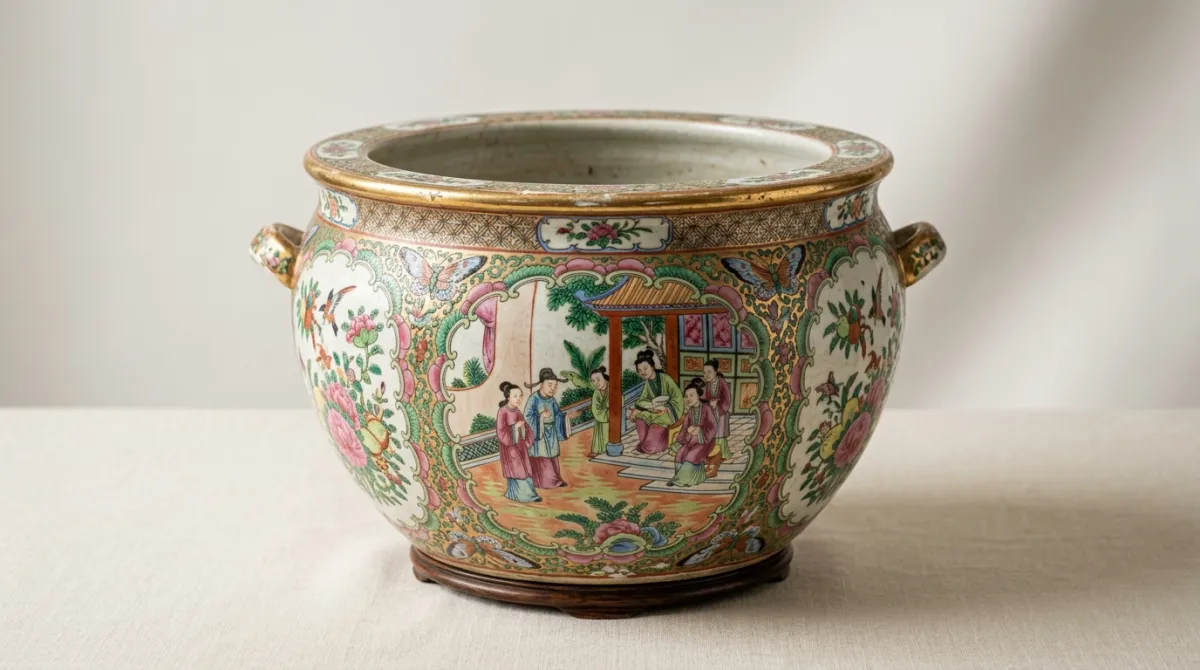
Kerry gets asked about planters more than almost any other Rose Medallion form, and it’s usually for a specific reason: someone found a beautiful piece and wants to actually put a plant in it. That question sits right at the crossroads of collecting and decorating, and the honest answer is more nuanced than most sellers let on. So let’s work through what these pieces actually are, what to check before you buy one, and what it means to live with one, whether that’s on a mantel or with something green growing inside.
What’s the difference between a jardinière, a cachepot, and a planter?
A jardinière is simply a decorative pot, usually a wide, sturdy vessel meant to hold or display plants. A cachepot is more specific: it’s an outer pot designed to hide a plain nursery pot inside it, and it typically has no drainage hole. A piece actually meant for direct planting, by contrast, may have a drainage hole. The terms get used loosely, but that drainage question is the one that actually matters practically.
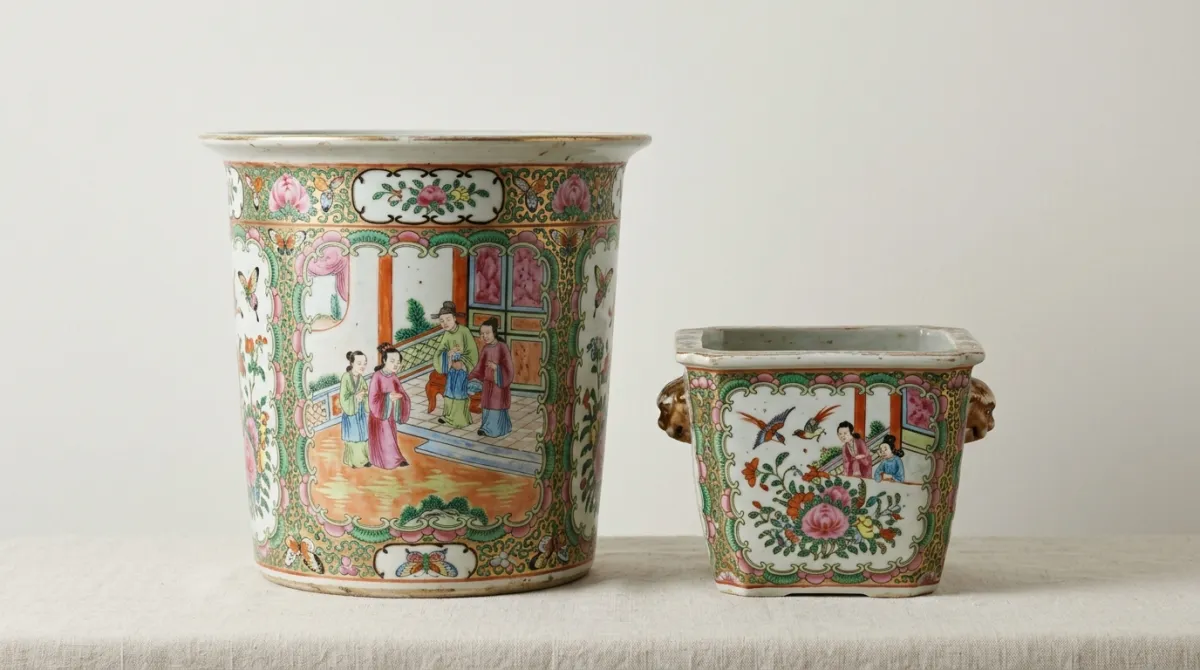
Most antique Rose Medallion pieces sold today as “planters” are really cachepots in function, whatever the listing calls them. They were made as decorative jardinière forms first, meant to be admired, and the idea of drilling a drainage hole into a fine hand-painted piece would have defeated the point. If you’re shopping with a live plant in mind, don’t assume the word “planter” in a listing tells you anything about drainage. Ask, or check yourself.
Kerry says she can usually tell a piece was designed as a cachepot rather than for direct planting just from the foot: cachepots tend to have a solid, unpierced base, sometimes slightly recessed, made to sit flat with no drainage hole. I’ve watched more than one customer at the studio assume a gorgeous jardinière would obviously have a hole underneath, and be surprised, sometimes a little deflated, to find out it doesn’t.
What sizes did Rose Medallion planters come in, and were they made in pairs?
Sizes range widely, from small tabletop pieces barely a hand’s width across to large floor jardinières meant to anchor an entryway or flank a fireplace. Many were made and sold in matched pairs, and a genuine pair generally commands more than the same two pieces would sell for individually, simply because intact pairs are scarcer.
The larger floor jardinières are the ones people tend to remember once they’ve seen a good pair in person. They were often designed to sit either side of a doorway or a hearth, sometimes on matching stands, and that architectural use is part of why size varies so much across the form. Smaller cachepots, on the other hand, were made in a huge range of sizes to suit different tabletop plants and were rarely as formally paired.
If you’re specifically hunting for a pair, look past the general pattern and compare the actual painting on both pieces closely. Kerry has seen “pairs” from dealers that turn out to be two similar but not identical pieces, painted years apart or by different hands, with the peony palette or the figures’ faces giving away the mismatch on close inspection. In our experience, buyers focus so hard on matching size and shape that the brushwork comparison, which is usually the more reliable tell, gets skipped entirely.
How do you check condition on a planter or jardinière?
Chips along the rim, hairline cracks in the body, gilt wear, and interior staining are the main things worth checking, and they’re worth going through methodically rather than glancing once. Run a finger slowly around the rim, since that’s the spot most likely to have small chips hidden under glaze glare, and check the foot rim the same way.
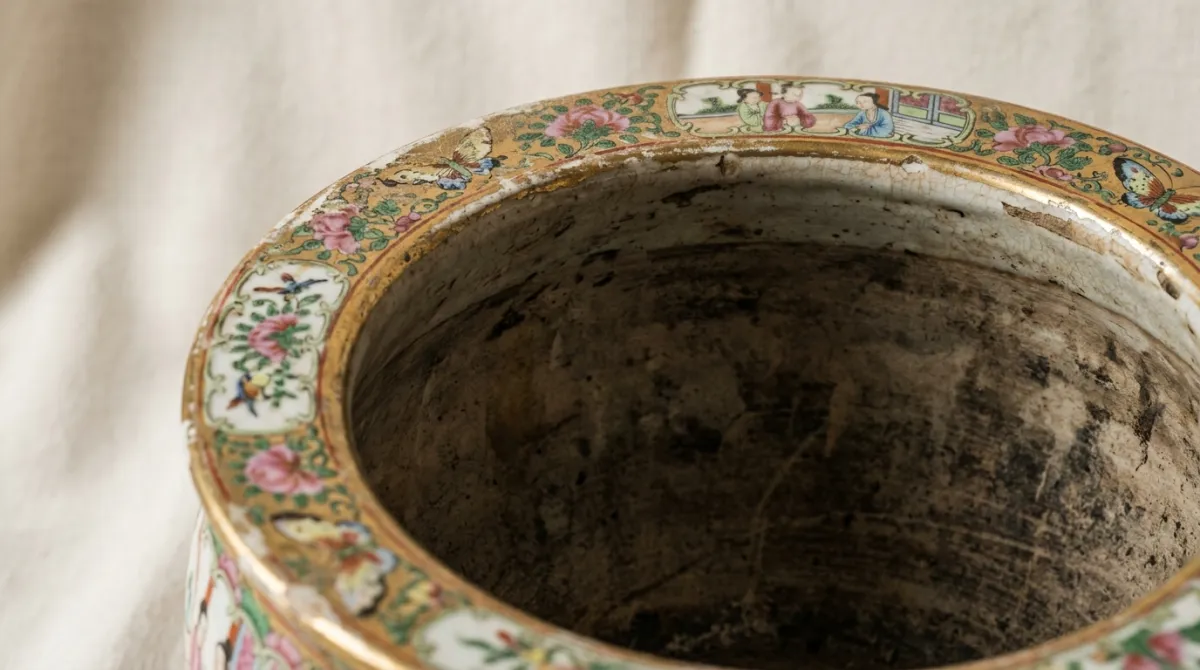
Interior condition deserves particular attention on planters, more than on most other forms. If a piece has ever actually held soil or standing water, even briefly, the interior glaze can show staining, crazing, or a dulled finish that the exterior won’t reveal at all. Tip the piece toward a strong light and look inside carefully; a clean, glossy interior is a good sign, while dark rings or a chalky texture suggest the piece was used, and possibly used hard, at some point.
Gilt wear reads the same way it does on any Rose Medallion piece: honest, uneven thinning from real handling looks different from bright gilding straight around a rim that should show at least some age. Hairline cracks can be tricky to spot on a wide, curved body, so it helps to hold the piece up and look through the walls where the porcelain is thinnest, and to tap gently and listen for a dull note rather than a clear ring. None of these checks proves anything alone; read them together, the way you’d read any other piece in the pattern. Our guide on how to identify Rose Medallion covers the brushwork and body checks in more depth, and they apply here too.
Antique or reproduction: how do you tell?
The same clues that apply across the pattern, body weight, foot-rim wear, brushwork texture, and gilding condition, apply to planters as well, and they work best read together rather than trusted one at a time. On a larger jardinière, weight and wall thickness can actually be a useful early clue, since a genuinely old, hand-thrown piece often has a slightly uneven wall you can feel with a hand run around the inside.
Turn the piece over and check the foot the same way you would on a plate, feeling for soft, rounded wear where a base has genuinely dragged across shelves and floors for decades, as opposed to sharp, uniform sanding meant to fake that look quickly. Look at the painted reserves under raking light too; hand-applied enamel has a slight texture and variation you can feel and see, while printed or transfer decoration tends to look flatter and too evenly saturated. Our full identification guide walks through this comparison with photos and specifics, and none of it changes just because the form is a planter rather than a plate.
Does the age of a piece actually matter to you as much as its condition and painting quality? For some buyers it’s everything; for others, particularly people planning to use a piece as decor with plants, a well-painted later piece in excellent condition might genuinely suit better than a fragile antique with a cracked interior glaze.
What actually drives the value of a Rose Medallion planter?
Value tracks size, whether it’s a genuine matched pair, painting quality, and condition, read together rather than any one factor deciding things on its own. A large, well-painted pair in clean condition will generally outvalue a similar single piece, even a genuinely older one, if that single has a chipped rim or a stained interior.
Painting quality remains the biggest lever across the whole pattern, and planters are no exception. Confident brushwork, well-drawn faces in the figural reserves, and rich, even color separate a genuinely fine piece from something merely decorative, at almost any size or age. Kerry can usually judge painting quality on a jardinière within a few seconds under raking light, well before she’s even checked the base or the marks.
Condition comes right behind painting quality, and interior condition specifically matters more here than on most forms, given how often these pieces actually held plants or water at some point in their history. Rarity plays in too: large floor jardinières and true matched pairs are harder to find intact than small single cachepots, and that scarcity shows in what serious collectors are willing to pay. Genuine age adds to value on top of quality and condition, but it doesn’t override them; a plain, damaged older piece isn’t automatically worth more than a beautifully painted, undamaged later one. Our guide to reading Rose Medallion marks is worth a look too, though on planters, as on most large forms, the body and the painting tell you far more than a mark ever will.
Can you plant directly in an antique planter?
Generally, no, and we’d steer most people away from it. Most antique Rose Medallion pieces lack real drainage, and soil and standing water sitting against old glaze can cause staining, crazing, and long-term stress that’s hard to reverse once it’s happened.
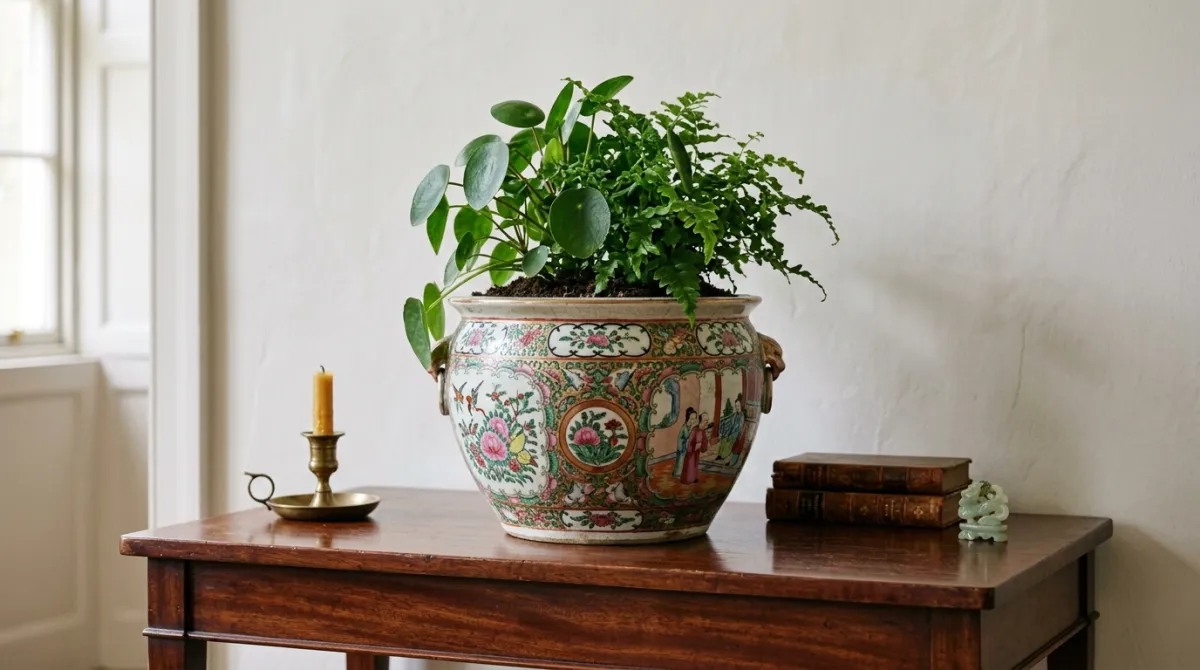
If you love a piece and want it holding something green, the safer route is to use it strictly as a cachepot: keep the plant in its own plastic nursery pot with proper drainage, and simply set that pot inside the antique piece. That way the decorative piece does its job, looking gorgeous on a mantel or in an entryway, without ever touching wet soil directly. It’s a small extra step, and honestly, it’s a common, conservation-minded approach.
If you genuinely need something that can take soil, water, and daily use without worry, that’s a case where a newer hand-painted piece, made specifically to function as a working planter, makes more practical sense than risking an antique. Our note on cleaning antique Rose Medallion covers safe handling more broadly, and a lot of the same caution applies to keeping a planter dry and protected long-term.
Commissioning a matching planter or pair
Antique jardinières in the exact size, pair, or condition you need are scarce enough that a custom hand-painted commission is often the more realistic option. Whether you’re missing one piece from a broken pair, need something built to actually drain and hold a real plant, or want a specific size for a spot flanking a doorway, custom work sidesteps a hunt that can stretch on for years without success.
This is the kind of request Kerry hears often at GoodTime Studio Macau, people with one surviving piece from a pair, or a very particular size in mind that just doesn’t turn up secondhand. Matching an existing antique’s palette and reserve layout takes real study before a brush ever touches the new piece, and building in proper drainage for a working planter is its own separate conversation about form. If either of those describes what you’re after, our commissions page is a good place to start, and for the wider story of the pattern these forms belong to, our Rose Medallion guide is worth a read too.
Frequently asked questions
What’s the difference between a jardinière and a cachepot?
A jardinière is a general term for a decorative planter or pot, while a cachepot specifically hides a plain nursery pot inside it and usually has no drainage hole. Most antique Rose Medallion “planters” function as cachepots, whatever the listing title says, so check the base yourself.
Do Rose Medallion planters have drainage holes?
Often not. Most were made as decorative jardinière or cachepot forms rather than working planters, so they lack a hole in the base. Check the foot directly rather than assuming; if there’s no hole, treat it as a cachepot and keep plants in their own pot inside it.
Can I plant directly in an antique planter?
We wouldn’t recommend it. Soil and standing water against old glaze can cause staining and stress the piece over time, and most antiques lack drainage anyway. Use a plastic liner pot inside instead, so the antique stays purely decorative and protected.
Were Rose Medallion planters made in pairs?
Often, yes, especially larger floor jardinières meant to flank a doorway or fireplace. A genuine matched pair, with painting that actually corresponds closely between the two pieces, is scarcer and generally worth more than the same two pieces bought separately.
How can I tell if a planter is antique?
Look at foot-rim wear, body weight, brushwork texture under raking light, and gilding condition, read together rather than any single clue on its own. None of these proves age alone, so weigh them together the same way you would with any other Rose Medallion piece.
Whether you’re deciding if a piece is safe to plant into, hunting for a genuine pair, or thinking about a custom jardinière built to actually hold a plant, we’re glad to talk it through honestly. Reach out through our commissions page, and we’ll tell you plainly what’s worth chasing secondhand versus what’s worth having made.
Keep exploring
More from Rose Medallion
Identification, history, and care guides for Rose Medallion and Canton porcelain. New guides added regularly.
Explore all guides