care display
How to Display and Hang Antique Plates Safely
Key Takeaways
- A padded or coated plate stand, sized correctly for the piece, is the safest way to display most antique plates without hanging them at all.
- If you do hang a plate, choose a spring-wire hanger sized to the rim, or a reversible adhesive disc hanger, and never over-tighten either one.
- Plate rails and cabinet shelves put no pressure at all on the plate and are the lowest-risk option for anything already cracked or repaired.
- Never wall-hang a plate with a hairline crack or a rivet repair; the extra tension can be enough to finish what the crack started.
- Keep displayed pieces out of direct sun, away from heat sources, and out of spots where a passing shoulder or a swinging door could knock them down.
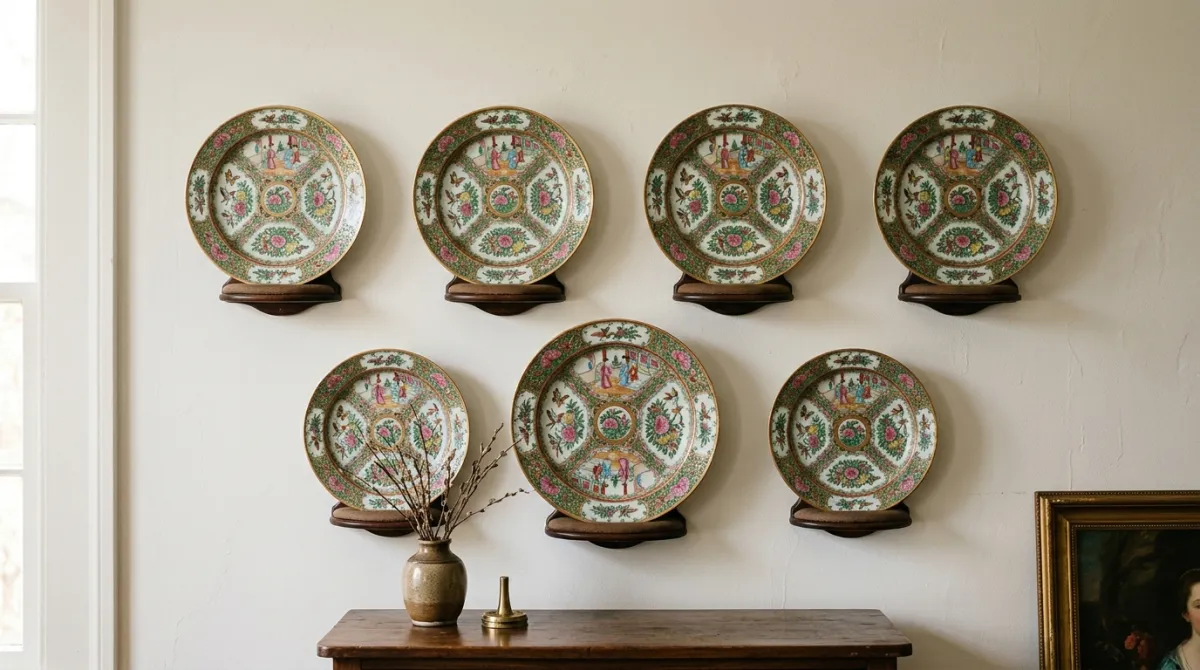
People ask Kerry Kwok some version of the same question almost every week at GoodTime Studio Macau: they’ve just inherited a plate, or bought one at an estate sale, and they want to put it somewhere they’ll actually see it. Fair enough. A plate tucked in a cupboard doesn’t do anyone much good. But antique porcelain wasn’t built to hang on a wall, and putting it there the wrong way is one of the more common ways a fine piece ends up chipped, cracked, or worse. So what’s actually safe?
How do you choose a safe plate stand?
A plate stand is one of the lowest-risk ways to display an antique plate, provided the stand is sized to the plate and padded or coated where it touches the porcelain. Bare metal wire, or a stand that’s even slightly too small, concentrates pressure right at the rim, the thinnest and most vulnerable part of the piece. (related: how to clean and display Rose Medallion)
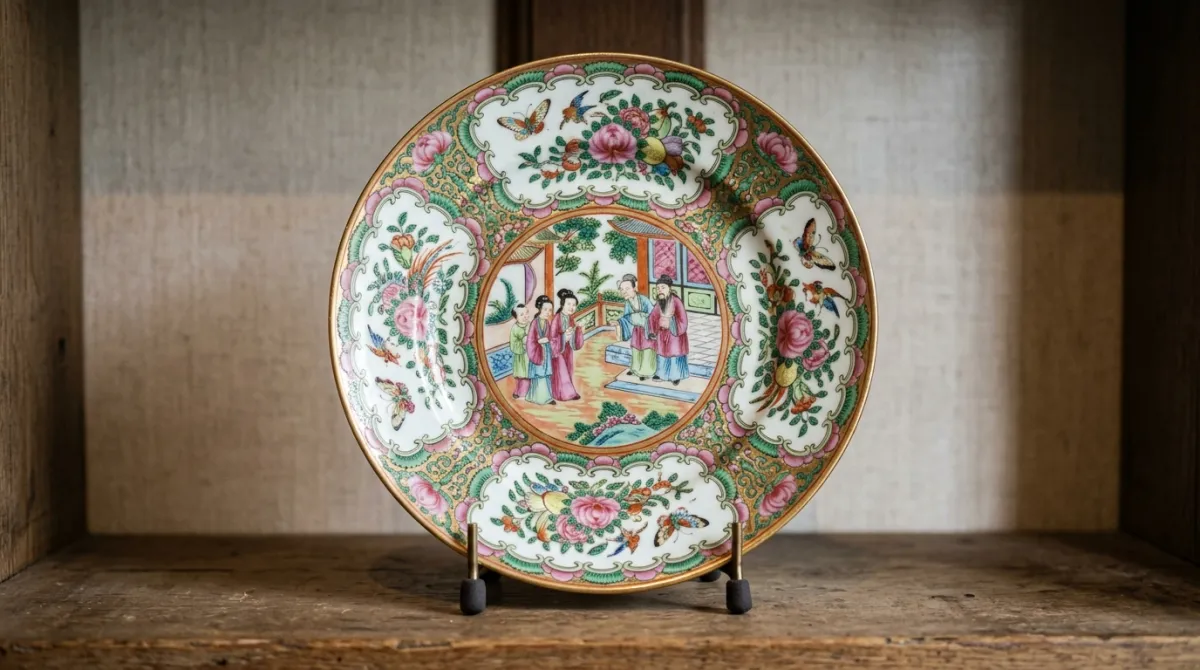
The stand does all the work of holding the plate upright, so the plate itself never has to bear its own weight against a tight grip. That’s a meaningful difference from a wall hanger, which by design puts the entire weight of the plate onto a small point of contact at the rim. A well-chosen stand spreads that load out instead.
Look for a stand with an adjustable back leg and a front lip or clip that’s cushioned, either with a soft coating baked onto the metal or a small strip of felt you add yourself. If a plate rocks or wobbles once it’s seated, the stand is too big. If you have to force the rim into place, it’s too small. Neither is worth the risk; a five-dollar stand swap is a lot cheaper than a repair.
Kwok keeps a small drawer of stands in different sizes at her studio for exactly this reason, since a plate that’s been custom-painted to fit a specific gap on a shelf still needs a stand that actually fits it. She says the plates that arrive at her studio for repair after a stand-related chip almost always came from a stand that was clearly the wrong size for the piece, just close enough that the owner didn’t notice.
Should you hang antique plates on the wall at all?
Hanging is fine for plates in stable condition, but it’s a genuinely higher-risk option than a stand, because the hanger’s grip has to support the plate’s full weight at one narrow point on the rim. A plate with any existing crack, chip, or old repair is a poor candidate for this, no matter how good the hanger looks.
Think about what a hanger actually does: it clamps or adheres to the back of the plate, then relies on that single point of contact to hold everything else in place against gravity. There’s no way around that physics, and it’s exactly why over-tensioned or badly fitted hangers cause more damage than almost any other display method.
That doesn’t mean hanging is reckless. Millions of plates have hung safely on walls for generations. It means the choice of hanger, and how carefully it’s fitted, matters more here than with almost any other display decision you’ll make.
Which wall hangers are safest for antique porcelain?
Spring-wire hangers sized correctly to the rim, and reversible adhesive disc hangers used according to the product’s instructions, are the two safest mainstream options, and each has a different failure mode worth knowing before you buy either one. Neither is automatically safer; the details of fit and installation matter more than the type.
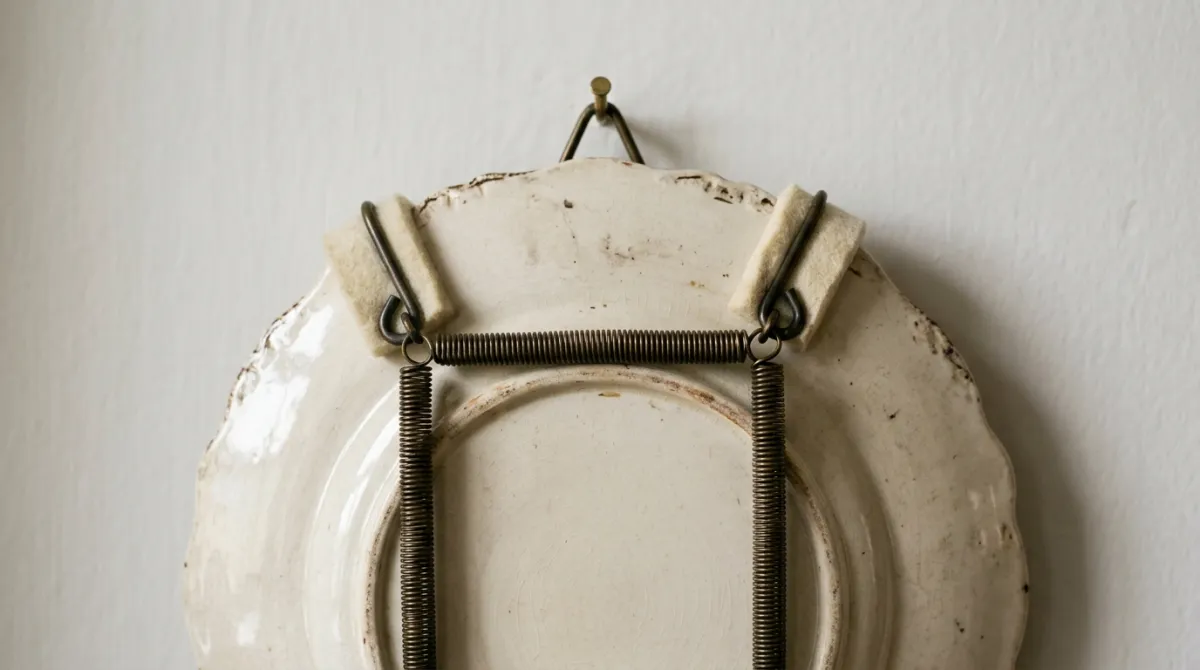
Spring-wire plate hangers
Spring-wire hangers grip the plate’s rim with two or more spring-loaded arms, usually coated in rubber or vinyl where they touch the glaze. The size has to match the plate closely; too small and you’ll have to force the arms wider than they’re designed to flex, and too large means the arms can’t grip firmly enough to hold the plate securely.
Over-tension is the real hazard here, not the hanger itself. Someone squeezing a hanger onto a plate that’s a size too small can put steady pressure on the rim for months or years, and porcelain under sustained stress can develop a crack it wouldn’t have gotten sitting on a shelf. Buy a hanger sized to your specific plate, not “close enough,” and check that the coating hasn’t worn thin or cracked before you use it.
Adhesive disc hangers
Adhesive disc hangers glue a small hook or D-ring to the underside of the plate, usually near the rim where the weight balances out. Some are marketed as reversible, using an adhesive designed to release cleanly later, though how well that holds up depends on the specific product and how long it’s stayed in place.
The trade-off runs the other way from spring-wire: there’s no rim pressure at all, but there’s a real risk the adhesive marks the glaze, discolors over time, or simply lets go without warning. Follow the manufacturer’s guidance closely, test on an inconspicuous spot first if the plate allows it, and don’t leave one holding a heavier plate than the label recommends.
Are plate rails and cabinets a safer alternative?
Plate rails put no clamping pressure and no adhesive anywhere near the plate, which makes them the lowest-risk display option available, especially for anything with a repair or a hairline you’re not fully confident about. The plate simply leans against a lip or groove, resting on its own base edge the way it would sit in a cupboard.
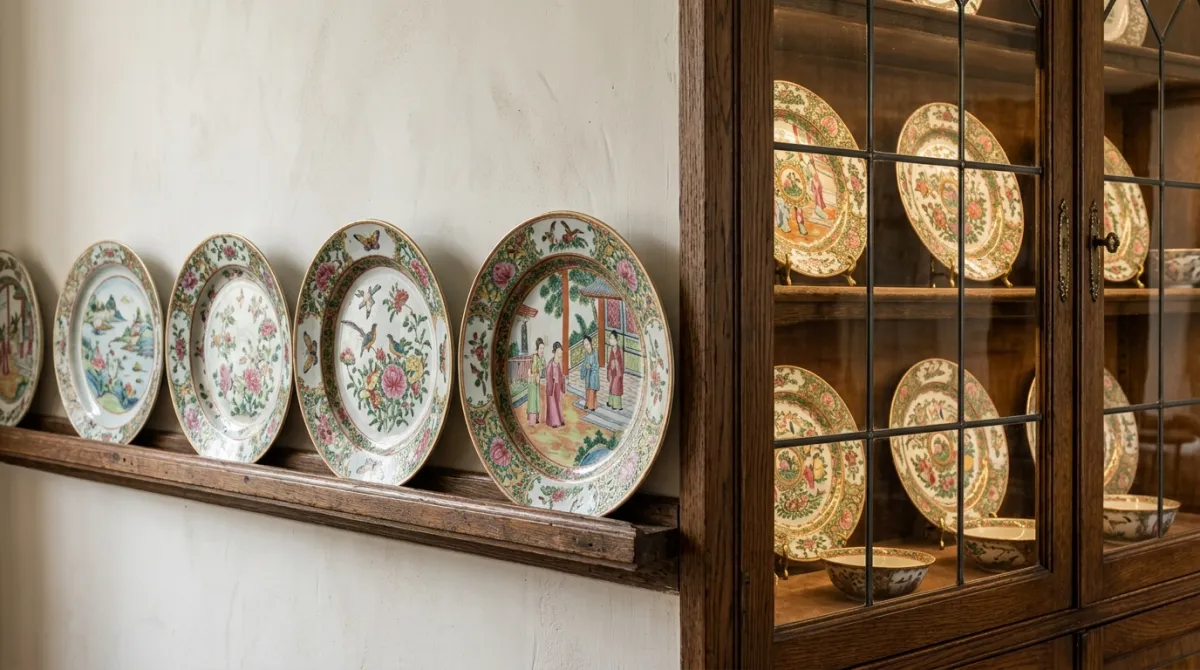
A plate rail is a narrow shelf, usually with a small raised lip along the front edge, mounted at a height where the plates lean back slightly against the wall. It’s a display method borrowed from old kitchen dressers, and it works for the same reason a dresser worked: gravity and a bit of friction, nothing more.
Cabinets and open shelving do the same job with even less handling, since the plate just sits flat or nearly flat rather than leaning at an angle. If you’re building out a larger display, a full guide to storing a porcelain collection covers spacing, felt separators, and how to avoid pieces knocking together over time.
None of this means hangers and stands are wrong choices. It just means that for a genuinely fragile or already-repaired piece, a rail or a cabinet shelf removes an entire category of risk that hanging can never fully eliminate.
Where should antique porcelain never be displayed?
Direct sunlight and any spot near a heat source, radiator, vent, or a stove, are the two locations to rule out before anything else, since sustained heat and repeated temperature swings put real strain on old glaze and on any prior restoration work. Sun alone is a smaller concern than heat, but avoiding both is simple enough that there’s little reason not to.
Beyond heat and light, think about foot traffic. A shelf right beside a doorway, or a rail along a narrow hallway, puts plates in the path of a bag strap, a swinging door, or a kid running past with more energy than judgment. A plate that’s survived 150 years doesn’t need to meet its end from a backpack.
If you’re hanging a heavier platter or a larger charger, anchor the hanger’s hook into a wall stud, or use a proper drywall anchor rated for the weight, rather than a small nail pressed into drywall alone. A plate that pulls its own hook out of the wall is arguably worse than one that was never hung in the first place. (more on identifying and valuing plates)
How often should you check your hangers and stands?
A quick look every few months is enough to catch most problems before they become a broken plate on the floor, since rubber coatings on spring-wire hangers can dry out and crack, and adhesive discs can weaken gradually without any obvious warning sign beforehand. It only takes a minute per piece.
Give the hanger a gentle wiggle, not a hard tug, and look at where the arms or disc contact the plate. Any visible cracking in a rubber coating, or a disc that’s started to lift at the edge, means it’s time to replace the hanger before it fails on its own schedule instead of yours.
Rotate pieces off a stand or hanger occasionally if you can, especially anything that’s been up for a year or more. Even a well-fitted hanger is still putting some load on the rim the whole time it’s in use, and a rest now and then costs nothing.
Frequently asked questions
What’s the safest way to hang an antique plate?
Use a spring-wire hanger sized correctly to the rim, with a padded or coated grip, or a reversible adhesive disc hanger used exactly as the product recommends. Avoid over-tightening either type, and skip hanging altogether if the plate has a crack or old repair.
Do plate hangers damage plates?
They can, usually when the hanger is the wrong size or over-tightened against the rim. A spring-wire hanger that’s too small forces the arms wider and adds constant pressure; a too-large one won’t grip securely enough to hold the plate safely.
Can I hang a cracked plate?
No. A crack, hairline, or old rivet repair is a sign to keep that piece on a rail, shelf, or padded stand instead, since hanging adds sustained tension right at the point most likely to fail.
How do I choose a plate stand?
Pick a stand with a padded or coated grip that’s sized closely to the plate, adjustable enough to seat it snugly without forcing the rim. If the plate wobbles or won’t seat cleanly, try a different size or shape of stand; if you have to squeeze it in, it’s too small.
Where should I not display antique porcelain?
Skip direct sunlight, spots near radiators or vents, and anywhere in a busy walkway where a passing bag, elbow, or door could knock a piece loose. Heat and traffic cause more damage over time than most people expect.
A last word on display
There’s no single correct way to display an antique plate, but there is a wrong-sized hanger, a bare metal stand, and a spot right above the stove. Match the display method to the condition of the piece, size everything correctly, and keep it out of the sun and out of the way of foot traffic. Do that, and a plate that’s already survived a century or more has every reason to see another one on your wall or shelf. If you’re rounding out a display and can’t find the right piece, GoodTime Studio Macau’s commission work is worth a look.
Simon Iong writes about Rose Medallion history and care. Craft insight in this piece comes from Kerry Kwok of GoodTime Studio Macau, a working 廣彩 painter trained under master Lei Iat Po.
Keep exploring
More from Rose Medallion
Identification, history, and care guides for Rose Medallion and Canton porcelain. New guides added regularly.
Explore all guides