care display
Storing and Protecting a Porcelain Collection
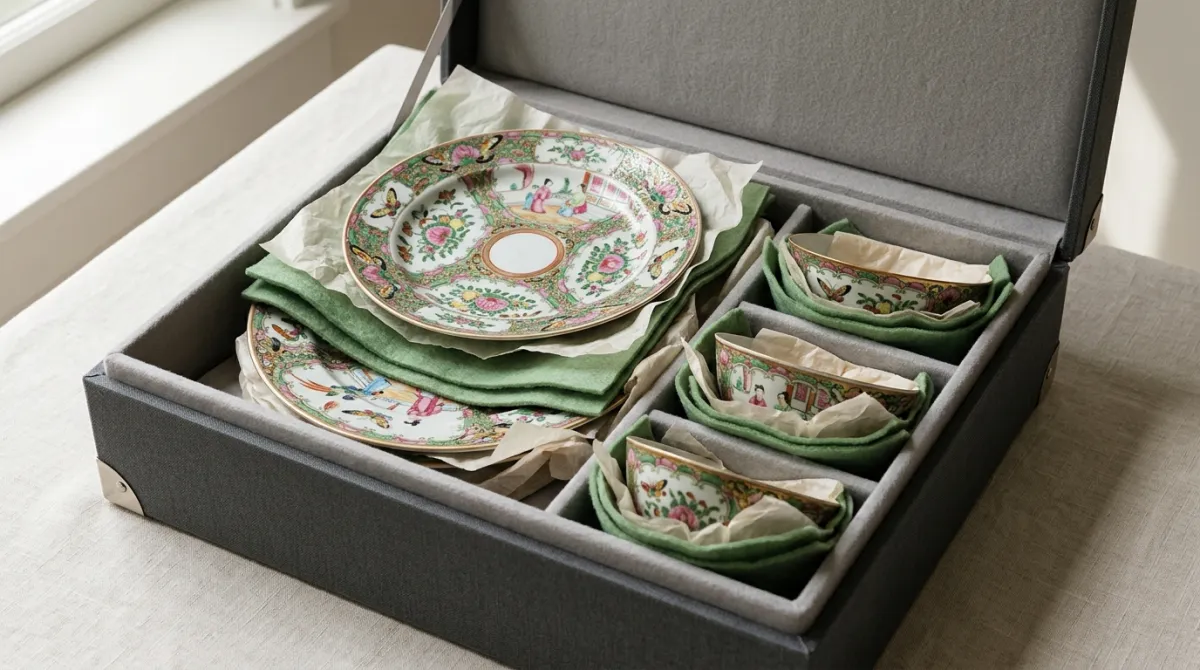
Key Takeaways
- Never let glaze touch glaze: separate every stacked plate with felt, soft cloth, or acid-free tissue.
- Don’t nest cups tightly or hang them by the handle; pad rims and store lids off or wrapped separately.
- Skip the attic and basement. Aim for a stable room with moderate temperature and humidity.
- Bubble wrap is fine short-term, but keep it off gilded surfaces directly for long stretches; use tissue first.
- Photograph and inventory your collection, and have valuable pieces appraised for insurance.
How should you stack antique plates for storage?
Never let one glazed surface rest directly on another. Place a round of felt, a soft cotton cloth, or a sheet of acid-free tissue between every plate before you stack them, and keep stacks to a manageable height, fewer for large or heavy plates.
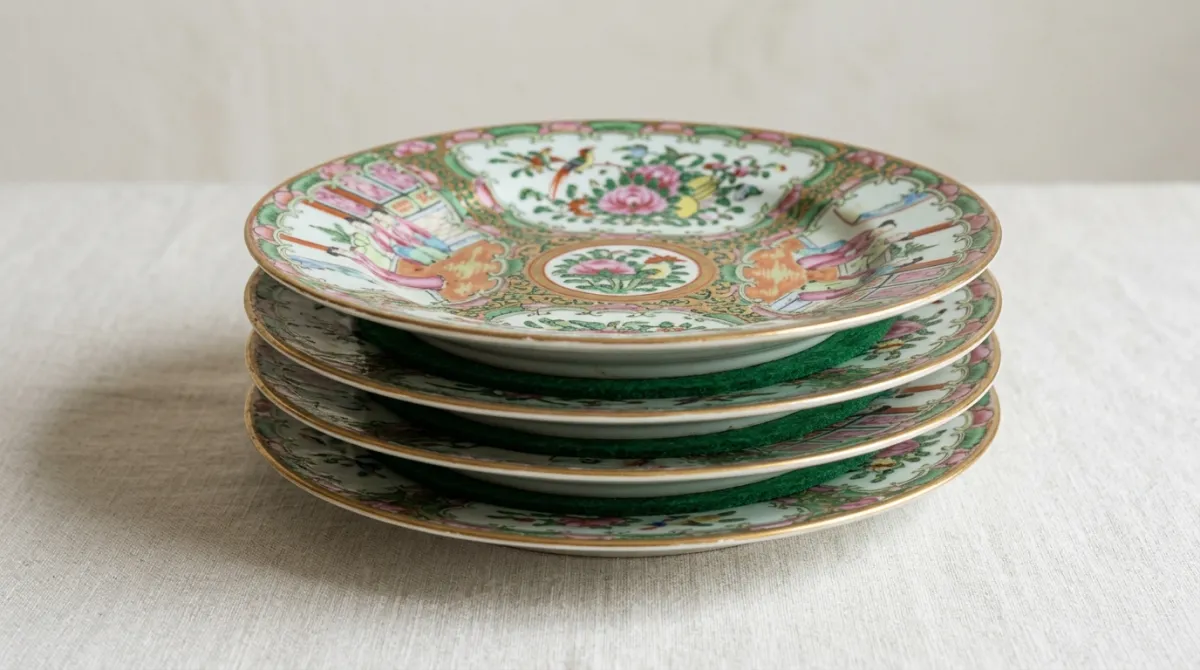
The reason is simple physics, not superstition. Two glazed surfaces pressed together, even gently, can trap grit you can’t see. Add the weight of a stack above, and that grit becomes a scratch through gold or enamel the next time someone lifts a plate off the top.
Stack same-size plates together rather than mixing dinner plates with smaller dessert plates. A larger plate under a smaller one leaves an unsupported rim overhang, and that overhang is exactly where chips start when the stack gets bumped or shifted.
If you’re not sure how to clean a piece before putting it away, it’s worth reading how to clean antique Rose Medallion first, since grime sealed under tissue for months only gets harder to shift later.
Kerry Kwok, who trained under 廣彩 master Lei Iat Po and now runs GoodTime Studio Macau, says stacking damage is one of the more common repair jobs that lands on her bench. “It’s rarely a dramatic drop,” she told me. “It’s usually a plate that sat under three others for two years with nothing between them.”
Can you nest cups and bowls the way you’d stack plates?
Don’t nest cups or bowls tightly, and never hang a cup by its handle for storage. Wrap each piece separately in acid-free tissue, and give handles a little extra padding, since old handles are one of the more fragile points on famille rose teacups and Rose Medallion cups alike.
Nesting bowls inside one another might seem space-efficient, but it puts constant pressure on the inner surface of the outer bowl and the outer surface of the inner one. Over months, that pressure can wear through enamel at the contact points, even without anyone touching the pieces.
Lids deserve their own thought. Store them off the pot or tureen when possible, wrapped in tissue on their own, rather than resting in place where a knob or finial can take pressure it wasn’t designed for. If a lid must stay on for space reasons, pad the gap between lid and rim with a folded cloth so nothing rattles or grinds.
Handles are the part I watch most closely in my own storage boxes. A handle that’s survived a century of use can still snap under an ordinary bump if it’s the only thing supporting a cup’s weight in a box. Wrap cups so the body, not the handle, takes any incidental pressure from neighboring pieces.
What should you actually pack pieces in?
Use acid-free tissue as the first layer against every piece, then a padded china storage box or case designed for dinnerware, and label each box with its contents before you seal it. Acid-free tissue matters because ordinary newspaper or regular tissue paper can transfer ink or acidic residue onto glaze and gilding over long storage periods.
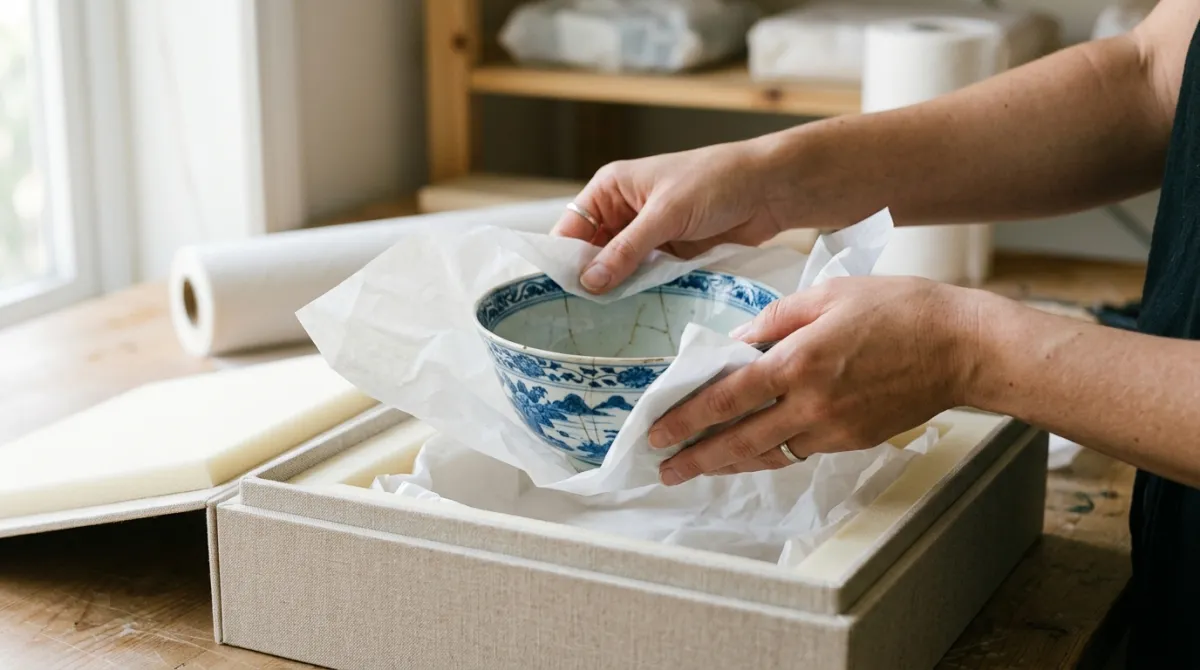
Bubble wrap has its place, but it’s not the ideal first layer for gilded or enameled porcelain kept in long-term storage. The plastic can trap moisture against a surface, and the raised bubble pattern can, over months, leave a faint texture impression on soft, low-fired gold. Wrap in tissue first, then bubble wrap around that if you need extra cushioning for a move or shipment.
Padded china storage boxes, the kind with individual fabric dividers, are worth the investment for a collection you plan to keep in storage rather than display. They hold pieces upright and separated without anyone having to improvise a stack. Label every box clearly, inside and out if you can, since a labeled box saves a lot of guessing (and a lot of unnecessary handling) the next time you need to find one specific plate.
Boxed storage isn’t the only option, of course. If you’d rather keep pieces out where you can enjoy them, displaying and hanging antique plates covers safer ways to do that without the risks tight boxed stacking is meant to avoid.
Does climate really matter for stored porcelain?
Yes, and it matters more than most people expect. Avoid attics and basements for long-term storage, since both tend toward temperature extremes and humidity swings that ordinary living space doesn’t have. Aim instead for a stable room with moderate temperature and humidity, ideally somewhere you’d be comfortable yourself.
An attic bakes in summer and can drop near freezing in winter, and that kind of swing stresses old glaze more than steady heat or steady cold ever would. Porcelain itself is fairly stable, but any prior repair, be it a rivet, an old glue line, or a hairline crack, reacts differently to expansion and contraction than the surrounding material does.
Basements bring the opposite problem: damp. Persistent moisture encourages mold, and mold doesn’t need much to take hold on old repair residue, a fabric-lined box, or even the tissue paper itself. If a basement is genuinely your only storage option, add a dehumidifier and check on the boxes seasonally rather than leaving them untouched for years. In our experience, big humidity swings are as much of a problem as any single reading, so stability matters, but that’s not a reason to accept a damp basement. Persistent moisture is still a real risk, which is exactly why a dehumidifier and seasonal checks matter if a basement is your only option.
How do you move a collection without breaking anything?
Move one piece at a time, using two hands to support the body of the item rather than gripping the rim or a handle. Clear a padded surface, a towel-lined table or a box lid works fine, before you pick anything up, so you’re never holding a piece with nowhere safe to set it down.
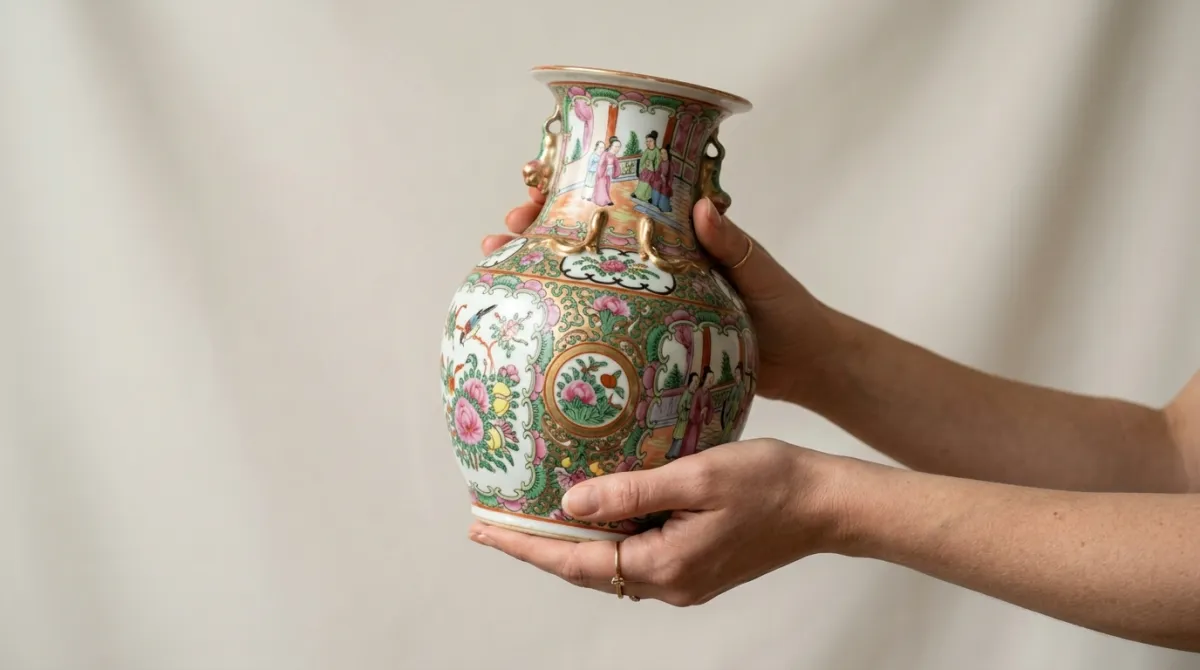
It sounds almost too simple to write down, and maybe it is. But most breakage during a move happens in the ten seconds after someone picks something up and realizes there’s nowhere obvious to put it. Having that surface ready removes the rush entirely.
For longer moves, wrap each piece individually before it goes anywhere near a box, and never let two wrapped pieces travel loose against each other in transit, even in tissue. A box with dividers, or one piece per small box, beats a large box with several pieces jumbled together no matter how much padding sits between them.
Why keep records of what you own?
Photograph every significant piece, keep a simple written inventory, and note whatever provenance you have, since a written record is often the only proof of a collection’s scope after theft, fire, or water damage. Insurance claims move faster, and settle more fairly, when you can show what a piece looked like and roughly what it was worth beforehand.
A basic inventory doesn’t need to be elaborate. A spreadsheet with a photo, a short description, an approximate date or maker’s mark, and a rough value estimate covers most of what an insurer or an appraiser will ask for. Update it whenever you add or lose a piece, not once a decade.
For anything you suspect is genuinely valuable, a professional appraisal is worth the modest cost, particularly before adding a piece to a homeowner’s or renter’s policy as a scheduled item. Of the collectors I’ve spoken with over the years who filed an insurance claim after damage or theft, the ones with dated photos and an appraisal on file consistently reported a smoother, faster settlement than the ones relying on memory alone.
If you’re building out care and display habits for a whole collection rather than one piece, the Rose Medallion guide pulls handling, cleaning, storage, and dating together in one place.
Frequently asked questions
How should I stack antique plates?
Separate every plate with felt, a soft cloth, or acid-free tissue so glaze never touches glaze directly. Stack same-size plates together, and keep stacks to four or five pieces so the bottom plate isn’t carrying too much weight.
Can I store porcelain in the attic or basement?
It’s best to avoid both if you have another option. Attics swing between heat and cold, and basements tend toward damp that can encourage mold on old repairs. A stable interior room is safer for long-term storage.
Is bubble wrap safe for long-term storage?
Not directly against gilded or enameled surfaces for extended periods. Wrap the piece in acid-free tissue first, then add bubble wrap around that if you need extra cushioning for a move or short-term storage.
How do I move a collection safely?
Move one piece at a time, supporting the body with two hands rather than the rim or handle. Clear a padded surface before you pick anything up, and never carry two unwrapped pieces together.
Should I insure my collection?
For valuable pieces, yes. Photograph each item, keep a written inventory, and get a professional appraisal before adding anything as a scheduled item on your policy, since documentation speeds up any future claim.
A last word on storage
Good storage isn’t glamorous, and nobody notices it’s working until a piece comes out of a box a decade later looking exactly the way it went in. That’s really the whole goal: felt between plates, tissue before bubble wrap, a stable room, and a record of what you have. Do those few things consistently, and a Rose Medallion collection can sit safely for years, ready for the next time you want it on the table or the shelf.
Simon Iong writes about Rose Medallion history and care. Craft insight in this piece comes from Kerry Kwok of GoodTime Studio Macau, a working 廣彩 painter trained under master Lei Iat Po.
Keep exploring
More from Rose Medallion
Identification, history, and care guides for Rose Medallion and Canton porcelain. New guides added regularly.
Explore all guides