care display
When to Restore Antique Porcelain (and How to Find a Conservator)
Key Takeaways
- Conservation stabilizes a piece; restoration makes it look whole again. They’re not the same job, and not every piece needs either.
- Honest age, wear, fleabites, and light gilt loss usually shouldn’t be “fixed.” Over-restoration can hurt both value and character.
- Active flaking enamel, structural cracks, or a piece you truly love are reasons to call a professional conservator, not a craft-store glue aisle.
- Household superglue and epoxy are common, damaging mistakes. They yellow, they don’t reverse, and they make proper repair harder later.
- Disclosed, professional restoration is normal in this field. Hidden or heavy restoration is what actually hurts trust and value.
Conservation vs. Restoration vs. Repair: What’s the Difference?
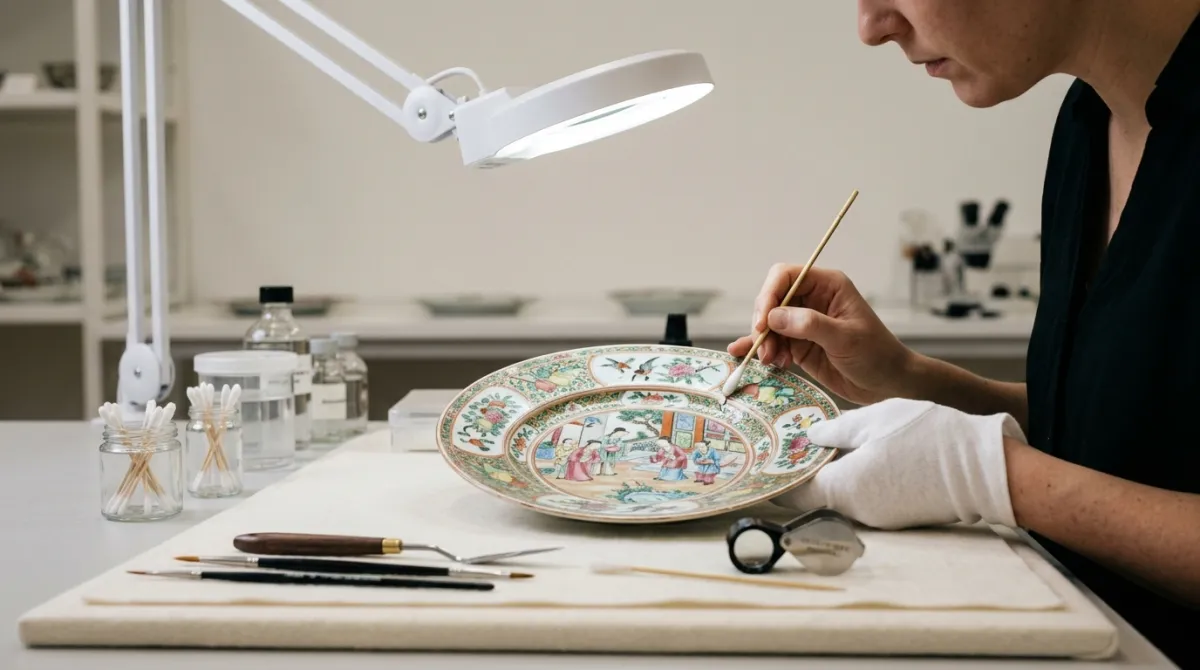
Conservation means stabilizing a piece with the least intervention possible, ideally in a way another conservator could undo later. Restoration goes further and tries to make a piece look whole again cosmetically. Repair, in the everyday sense, is neither. It’s usually just glue, and it’s usually the option that causes the most long-term damage.
I get asked about this a lot, more than you’d think for someone who paints new porcelain rather than fixes old porcelain. People assume that because Rose Medallion is what we do, we must also be the people to call when a great-aunt’s tureen lid cracks. We’re not, and I’ll get to why that separation matters later.
What I’ve learned from watching my wife Kerry work, and from years of handling antique pieces alongside our own new ones, is that conservators think in terms of reversibility first. A good conservator asks “can this be undone by someone else in twenty years?” before they ask “does this look good?” That order of questions is basically the whole philosophy in one sentence.
A crude repair skips that question entirely. It just wants the crack gone today, and it doesn’t care what happens to the piece in 2046.
When Should You Leave Antique Porcelain Alone?
Most antique porcelain doesn’t need restoring at all, and leaving it alone is often the right call. Minor fleabites on a rim, soft crazing in the glaze, faded gilding from decades of hand use: these are signs of age, not damage that needs correcting. Collectors and dealers generally read them as honest wear, and honest wear is part of what makes a 100-year-old plate look like a 100-year-old plate.
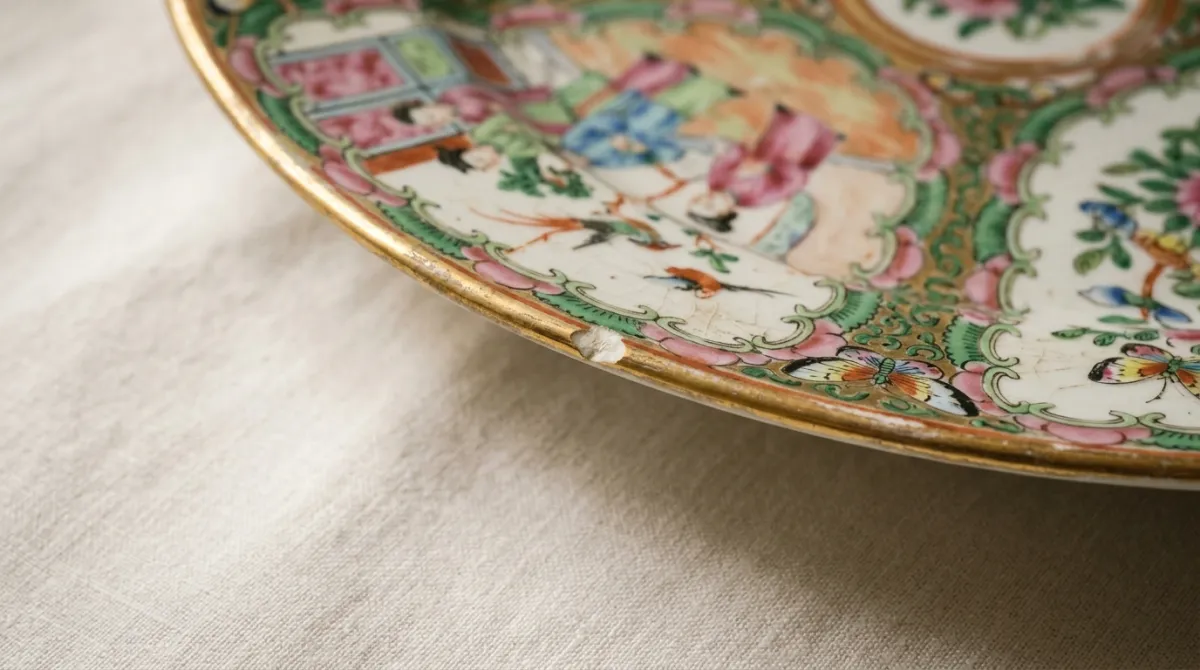
This is where I think a lot of new collectors get nervous for no good reason. They see a small chip or a thin patch of worn gold and immediately want it “fixed.” But ask yourself: fixed for whom? A piece that’s been in a family for three generations doesn’t need to look factory-new. It needs to look like what it is.
Over-restoration is a real risk, and it’s more common than people expect. A piece that’s been aggressively re-gilded or over-cleaned to erase every trace of age can end up looking flatter and less convincing than one with honest, visible history. Buyers who know porcelain often prefer a plate with a little softness in the gold to one that’s been polished into looking like it rolled off a modern production line.
If you’re trying to work out whether wear like this is normal for a piece its age, it helps to first pin down what you actually own. Our guide to how to identify Rose Medallion walks through the marks of genuine 19th and early 20th century export porcelain versus later reproductions, and that context changes how you should think about any wear you’re seeing.
Signs Your Piece Actually Needs Professional Help
Active flaking or lifting enamel is the clearest sign a piece needs professional attention now, before the damage spreads further. Overglaze enamel that’s starting to lift at the edges won’t stop on its own. Left alone, a small lifted patch can flake away entirely within months of continued handling or display.
Structural cracks are the second category worth taking seriously. A hairline crack that runs through the body of a piece, especially one near a handle or foot, is under stress every time the piece is moved, washed, or even just picked up. That stress doesn’t resolve itself. It tends to get worse.
The third category is less about the object and more about you: pieces with real sentimental or financial value deserve a professional look even when the damage seems minor. A cracked plate from a flea market and a cracked plate that was your grandmother’s aren’t the same decision, even if the crack itself is identical.
If any of these apply, the piece should go straight to a conservator, not into a drawer “until later.” Delay is its own kind of damage here. Kerry has seen plenty of pieces where six months of “I’ll deal with it eventually” turned a stabilizable crack into a much bigger repair job.
For day-to-day handling in the meantime, our post on how to clean antique Rose Medallion covers how to avoid making a fragile piece worse while you’re waiting to get it looked at.
Why Superglue Is the Enemy of Antique Porcelain
Household superglue and epoxy are two of the most common causes of permanent damage Kerry sees in older porcelain, and neither belongs anywhere near an antique piece. These adhesives cure hard, they yellow visibly within a few years, and they’re effectively impossible to remove without damaging the glaze underneath.
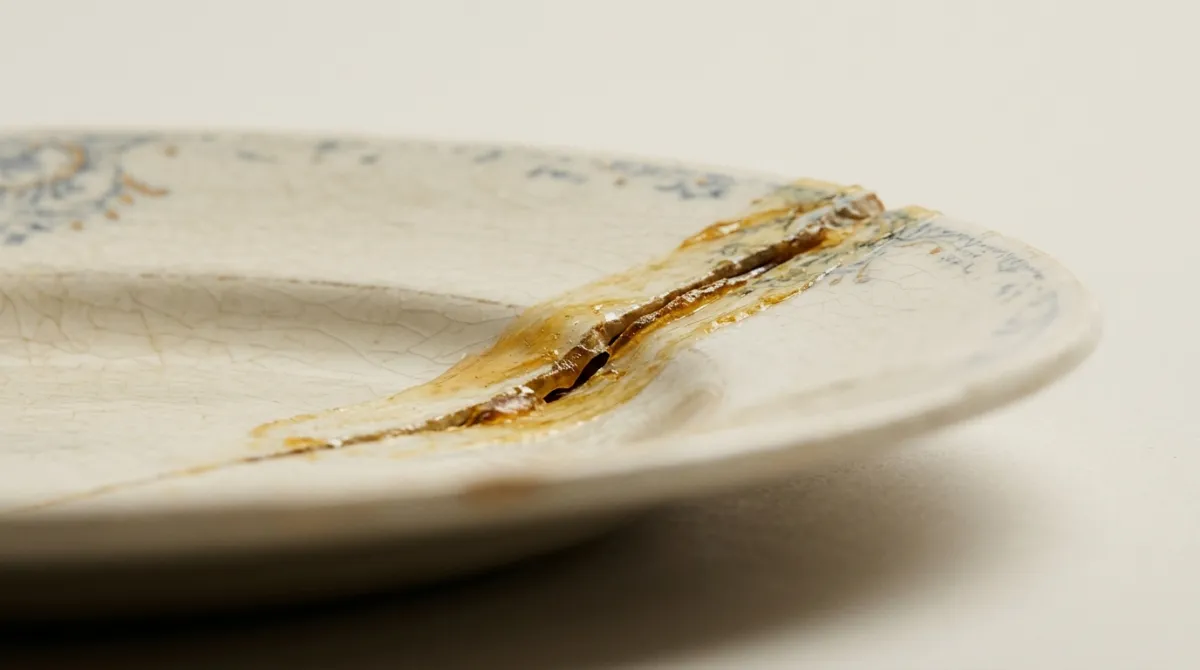
Here’s the part that surprises people: it’s not really about whether the glue holds. Cyanoacrylate glue often does hold a break together just fine, at least for a while. The problem is what it does to the piece afterward, and to anyone’s ability to fix it properly later. Kerry regularly sees plates and vases where a well-meaning owner glued a break decades ago, and now a conservator can’t even get a clean look at the original break line without removing hardened, discolored adhesive first. That removal step is often harder and riskier than the original repair would have been.
Reversibility is the whole point of professional conservation work, and superglue takes that option off the table. A conservator uses adhesives that can be softened and removed later, by them or by someone else, without harming the glaze or the enamel around the break. Superglue makes that promise impossible to keep.
So if a piece breaks, resist the instinct to reach for the glue drawer. Wrap the pieces separately, keep them somewhere safe and dry, and get in touch with a conservator before you touch it again. It’s a small delay that keeps every future option open.
Does Restoration Affect the Value of a Piece?
Disclosed, professional restoration is completely normal in the antiques trade and rarely tanks a piece’s value on its own. What actually damages value and trust is restoration that’s hidden, heavy-handed, or discovered later by a buyer who wasn’t told about it. The restoration itself usually isn’t the problem. The lack of honesty about it is.
Think about it from a buyer’s side for a second. A well-documented, professionally restored plate with a disclosed hairline repair is a known quantity. A plate that looks perfect but turns out to have a repainted section nobody mentioned? That’s a trust problem, and trust problems are much harder to fix than porcelain problems.
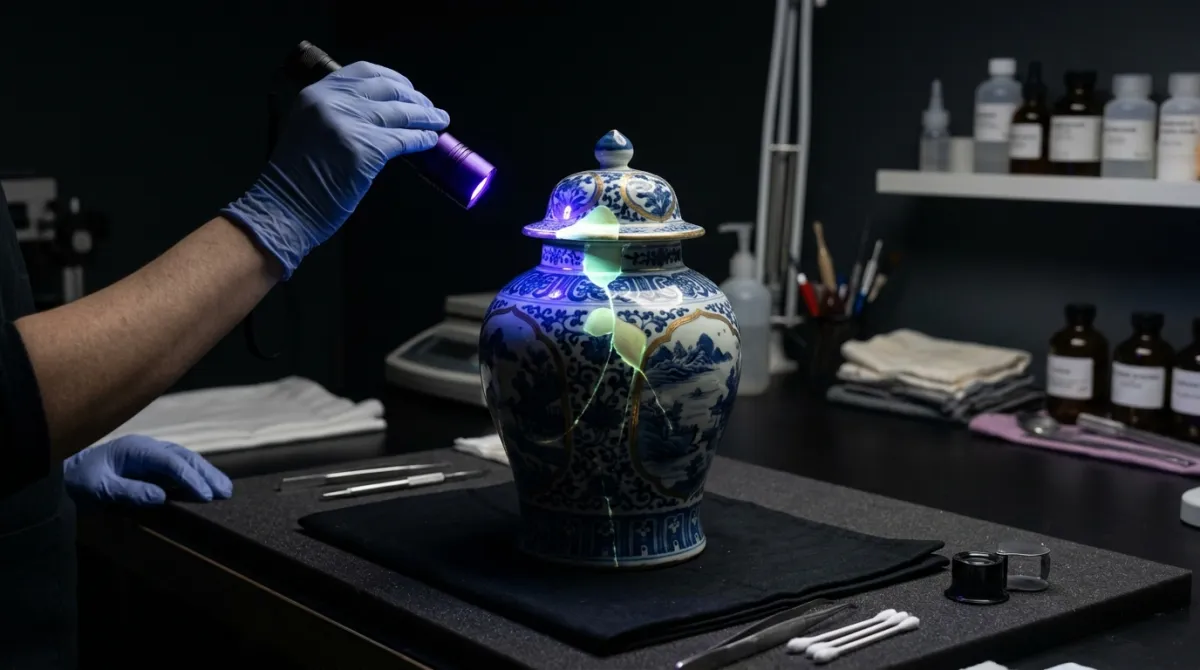
Serious buyers and appraisers routinely check for undisclosed restoration using UV light, which makes many overpainted or filled areas fluoresce differently than the original glaze and enamel. Specialists can often spot repair work this way even when it’s invisible under normal light. If a piece has been restored and you’re selling it, assume it will be checked, and disclose it upfront rather than let someone else find it.
The practical takeaway: get restoration done properly, document what was done, and be upfront about it when you sell or pass a piece along. Quality, disclosed work protects value. Quiet, undisclosed work erodes it, sometimes years after the fact.
How Do You Find a Qualified Ceramics Conservator?
Look for a conservator who specializes in ceramics or porcelain specifically, ideally one affiliated with a recognized professional conservation body in your country. General “china repair” services aren’t the same thing as a trained ceramics conservator, and the distinction matters more than people expect. Professional bodies typically maintain directories you can search by specialty and region.
Museums are another good starting point, even if you have no intention of donating anything. Local and regional museums with ceramics collections often work with conservators regularly and can point you toward names they trust. A quick email to a museum’s collections or conservation department is a perfectly normal thing to send.
When you talk to a prospective conservator, ask how they’d approach the repair before you ask what it costs. Do they favor reversible materials and techniques? Will they document the work and photograph it before and after? A conservator who’s happy to walk you through their approach is usually the right kind of professional to work with.
Get a written estimate before anything happens to the piece, and ask what the timeline looks like. Good conservation work isn’t fast, and a conservator who promises a same-week turnaround on a serious repair is worth a second thought.
One thing worth saying plainly: we paint new porcelain here, we don’t restore antiques. If you’re looking for a piece with the same Rose Medallion palette and technique but no history to repair, our commissioned pieces are hand-painted from scratch. For anything that needs actual conservation work, please see a qualified professional instead.
Frequently asked questions
Should I repair a chipped antique plate?
Usually not, if it’s minor. A small fleabite or edge wear is normal aging and generally shouldn’t be “fixed” cosmetically. If the chip is large, sharp, or near a stress point, or the plate has real sentimental or financial value, get an opinion from a professional conservator instead of doing it yourself.
Can I use superglue on antique porcelain?
No. Household superglue and epoxy yellow over time, cure irreversibly, and make future professional repair harder and more expensive. If a piece breaks, keep the pieces safely stored and contact a ceramics conservator rather than gluing it back together yourself.
Does restoration lower the value of antique porcelain?
Not usually, if it’s professional and disclosed. What lowers value is hidden or heavy restoration discovered later by a buyer, since that damages trust as much as it reflects on the piece itself. Always disclose known restoration when selling or valuing a piece.
How do I find a ceramics conservator?
Search directories from recognized professional conservation associations in your country, or ask a local museum with a ceramics collection for a referral. Ask any prospective conservator about their approach to reversibility and documentation before you commit to the work.
How can you tell if a piece has been restored?
Specialists often use UV light, since repaired, filled, or overpainted areas can fluoresce differently from the original glaze and enamel under it. Restoration isn’t always visible in normal light, which is part of why disclosure matters so much when a piece changes hands.
The bottom line
Most antique porcelain is better left as it is, honest wear and all. Save real intervention for pieces with active damage, structural cracks, or genuine sentimental weight, and put that work in the hands of a trained ceramics conservator rather than a bottle of glue. Ask about reversibility, get things documented, and disclose any restoration when a piece changes hands. If you’re building out a wider care routine, our Rose Medallion guide is a good next stop for handling, display, and everyday questions like this one.
Simon Iong writes about Rose Medallion porcelain at GoodTime Studio Macau, where his wife Kerry Kwok hand-paints new pieces in the traditional 廣彩 style she learned under master Lei Iat Po.
Keep exploring
More from Rose Medallion
Identification, history, and care guides for Rose Medallion and Canton porcelain. New guides added regularly.
Explore all guides