care display
Is Antique Chinese Porcelain Safe to Eat Off? Lead and Everyday Use
Key Takeaways
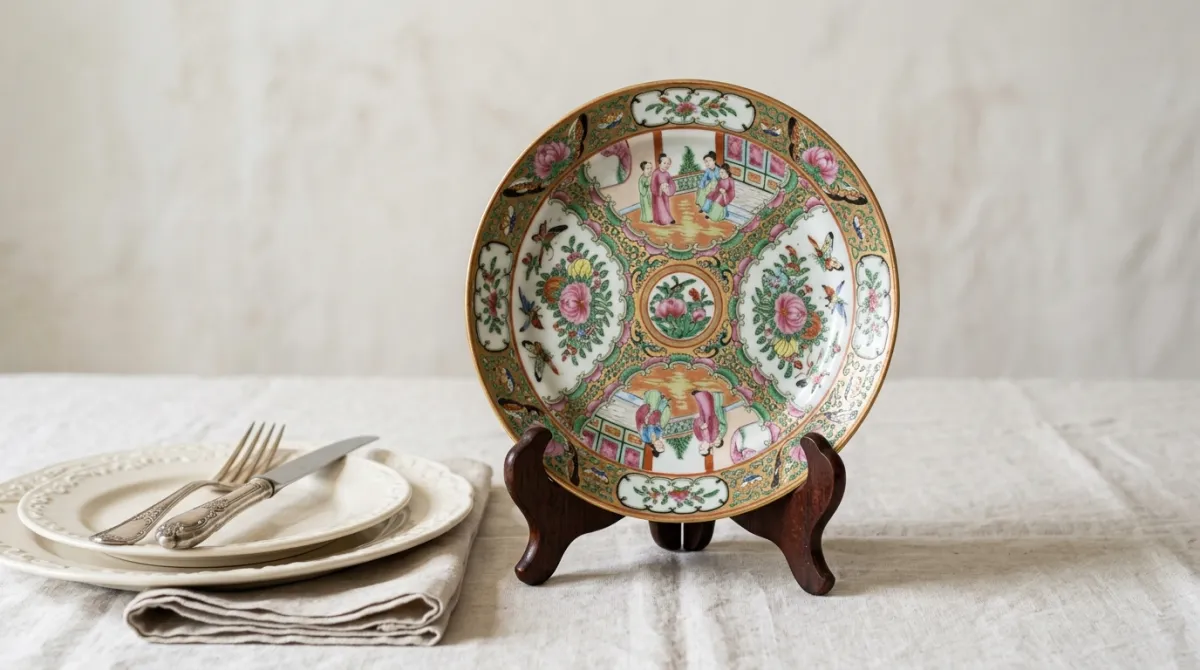
- Treat antique Chinese porcelain, especially famille rose and Rose Medallion, as display ware by default, not everyday dinnerware.
- The main concern on overglaze-decorated antiques is usually the enamels and gilding painted on top, which can contain lead (and sometimes other hazardous metals).
- Worn, chipped, or crazed decoration, plus acidic or hot food, raises the risk; a smooth, intact glaze lowers it.
- Underglaze blue-and-white is generally lower-risk than overglaze enamels, but caution still applies to any antique of unknown history.
- If you want Rose Medallion you can actually eat off, a new custom piece made to modern food-safe standards is the safer route.
Can you eat off antique Rose Medallion?
Honestly, our default answer is no, not as everyday dinnerware. Antique famille rose and Rose Medallion pieces were decorated with overglaze enamels, and those enamels can contain lead. We’d rather you display a beautiful 19th-century plate than risk your health finding out the hard way.
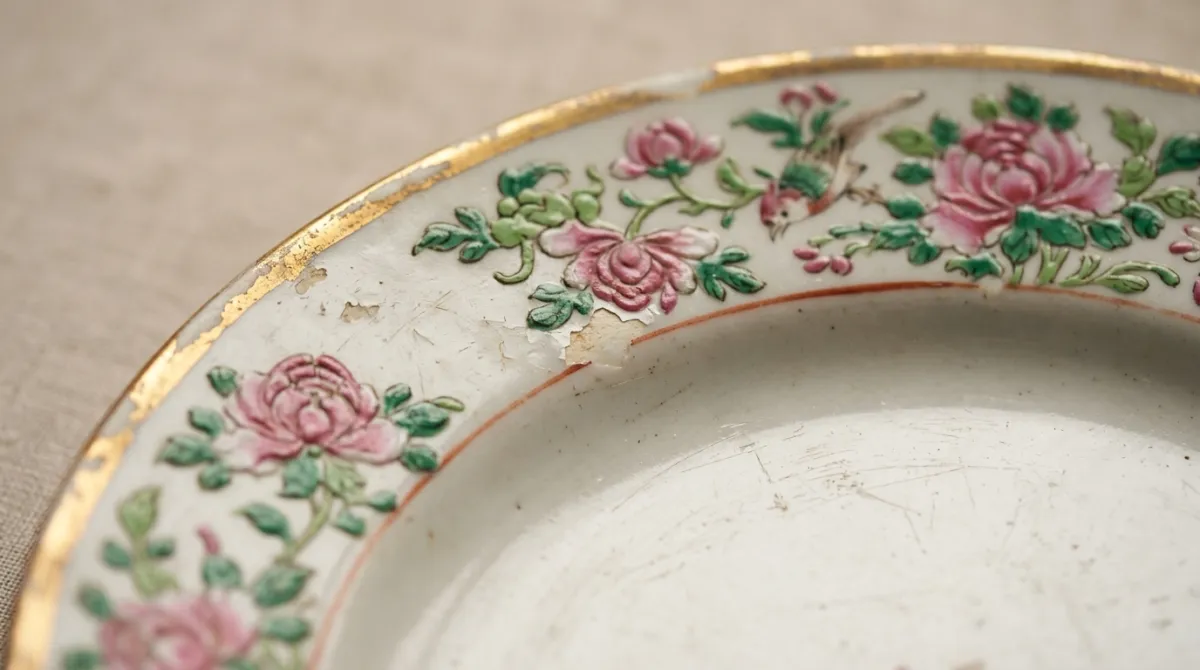
That’s not us being dramatic. It’s just how the pieces were made. The base porcelain itself, the white clay body fired at high temperature, isn’t the issue. The issue sits on top of it: the painted medallions, the pink and green enamels, the gold rim. Those were applied after the piece was already glazed, then fixed with a second, much cooler firing that never fully fuses them into the glass-like surface underneath.
We get asked this a lot at the studio, usually by someone who’s inherited a full dinner service and wants to know if they can finally use grandma’s plates for Sunday dinner. It’s a fair question, and it deserves a real answer instead of a shrug. If you’re still getting familiar with the pattern itself, our Rose Medallion guide is a good place to start.
Why does it matter that the decoration sits on top of the glaze?
Because anything painted on after the glaze fires can behave differently than the glaze itself over time. Overglaze enamels and gold size were formulated to look rich and durable, not necessarily to withstand decades of contact with food, acid, and heat. That was true the day the piece left the kiln, and age alone doesn’t improve it.
Does antique china really contain lead?
Historically, yes, lead compounds were common in overglaze enamel formulas and in gilding, since lead helped the colors flow and fuse at the low firing temperatures those decorations required. We can’t tell you the exact amount in any given piece without lab testing, but the possibility is real enough that we treat every antique the same way: carefully. Lead isn’t the only concern, either, some historic overglaze colours, certain reds and yellows especially, could also involve other hazardous metals such as cadmium.
Kerry Kwok, my wife and the porcelain painter behind GoodTime Studio Macau, has spent years mixing and firing these same families of enamel by hand. She studied under 廣彩 master Lei Iat Po and paints famille rose designs every week, so she knows the chemistry from the inside, not just from a textbook. She’s quick to point out that historic formulas and modern studio formulas aren’t the same thing, and that’s exactly the gap that makes old pieces worth treating with more caution than new ones.
What makes this trickier is that you can’t tell by looking. A plate with worn, dull enamel and a plate with bright, glossy enamel might both have lead in the decoration; wear tells you about risk of exposure, not about whether lead is present at all. That’s an uncomfortable truth, but it’s the honest one.
What actually raises the risk?
A few conditions matter more than others, and they’re worth thinking about together rather than in isolation. None of these guarantee a problem, but each one nudges the odds in the wrong direction.
- Worn, scratched, or chipped enamel and gilding, since damaged decoration exposes more surface area
- Crazing (a fine web of hairline cracks in the glaze) that can trap residue against the decorated surface
- Acidic foods and drinks, like citrus, tomato sauce, wine, or vinegar-based dressings
- Hot liquids, which can interact differently with old enamel than cool or room-temperature food
- Prolonged contact, meaning the piece sits full of food or drink for hours rather than minutes
Put a slice of dry toast on a pristine plate for two minutes, and the risk profile looks very different than leaving a bowl of tomato soup in a crazed, chipped one overnight. Context matters here, not just the piece itself. Good handling and cleaning habits, covered in our care guide, also help keep enamel from wearing down in the first place.
Is blue and white safer than famille rose?
Generally, yes, underglaze blue-and-white tends to carry lower risk than overglaze famille rose, because the cobalt decoration is painted before glazing and gets sealed underneath the glaze during the main firing. That seals the color inside a single glassy layer rather than leaving it exposed on the surface.
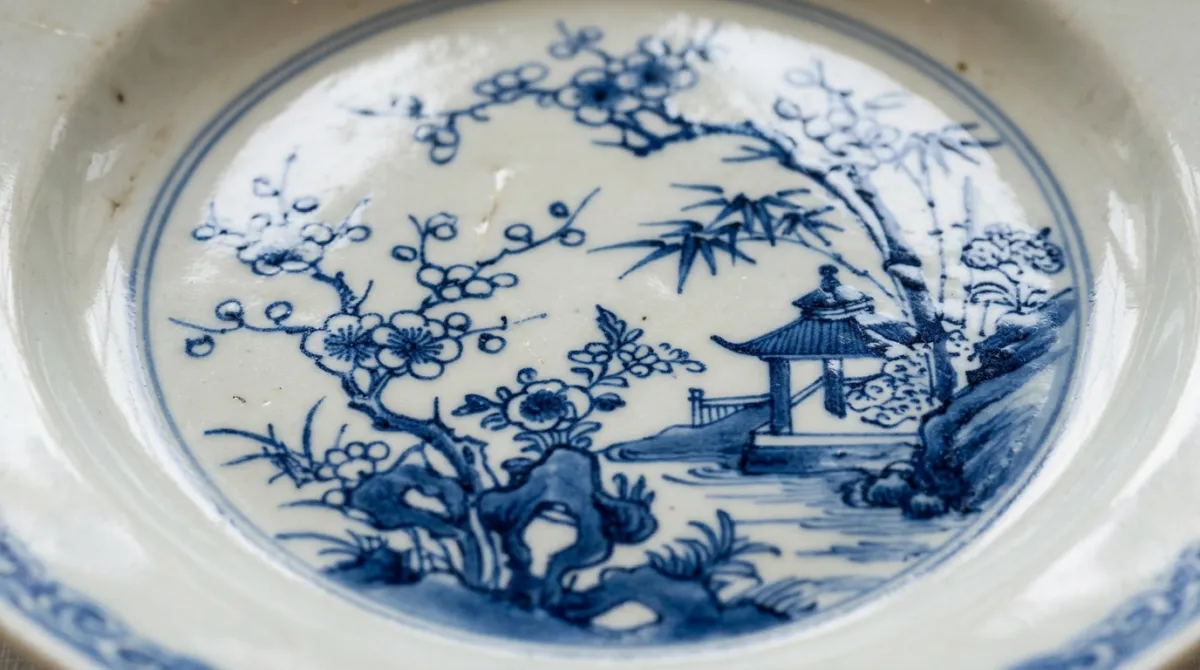
Underglaze decoration, once fired, becomes part of the glaze itself rather than a separate layer sitting on top of it. That’s structurally different from famille rose enamels and gilt, which stay on the surface. It’s a meaningful distinction, and it’s part of why blue-and-white export wares have a long history of everyday kitchen use.
That said, we wouldn’t hand you a blank check here. An antique blue-and-white bowl of unknown age and unknown history could still have overglaze touches, a repaired rim, or glaze wear you can’t see from across the room. In our experience, people assume “blue and white equals safe” a little too quickly, when really it just means “one major risk factor is reduced,” not “zero risk.” The well of the plate, where food actually sits, matters more than the rim pattern, a point we come back to often in our guide to Rose Medallion plates.
What about the food-contact surface specifically?
Focus on the well of the plate or the interior of the bowl, since that’s where food actually touches the piece for any length of time. A decorated rim you never put food against carries less practical concern than a painted center you’d be resting a fried egg on every morning.
Do home lead test kits actually work?
Home lead swab tests can flag a positive result on decoration, but they have real limits: they typically test the surface only, and they can miss lead sealed under a clear coat or give inconsistent readings. A negative result doesn’t mean a piece is lead-free, just that the swab didn’t detect it that time.
We’re not against these kits; they’re inexpensive and can be a reasonable first check. But we wouldn’t stake anything important on one, and we’re not qualified to tell you they’re a substitute for real testing. If you genuinely need a confident answer, a professional lab test designed for glaze and enamel analysis is the more reliable option, and it’s worth the modest cost if the piece is one you’re seriously considering using.
We should say clearly: none of this is medical, legal, or laboratory advice. We’re porcelain people, not toxicologists, and if you have specific health concerns, a qualified professional or accredited testing lab is the right resource, not a blog post.
Is displaying antique porcelain still fine?
Absolutely, yes. Handling, dusting, and displaying antique Rose Medallion carries none of the food-contact concerns we’ve talked about here. This whole conversation is specifically about eating and drinking off a piece, not about owning, admiring, or living with one.
Can you get Rose Medallion you can actually use at the table?
Yes, and this is where new custom work fills the gap antiques can’t. A hand-painted piece made today, using modern food-safe enamels and glazes, can be produced to meet current safety standards while still carrying the same famille rose patterns and palette people love about the antiques.
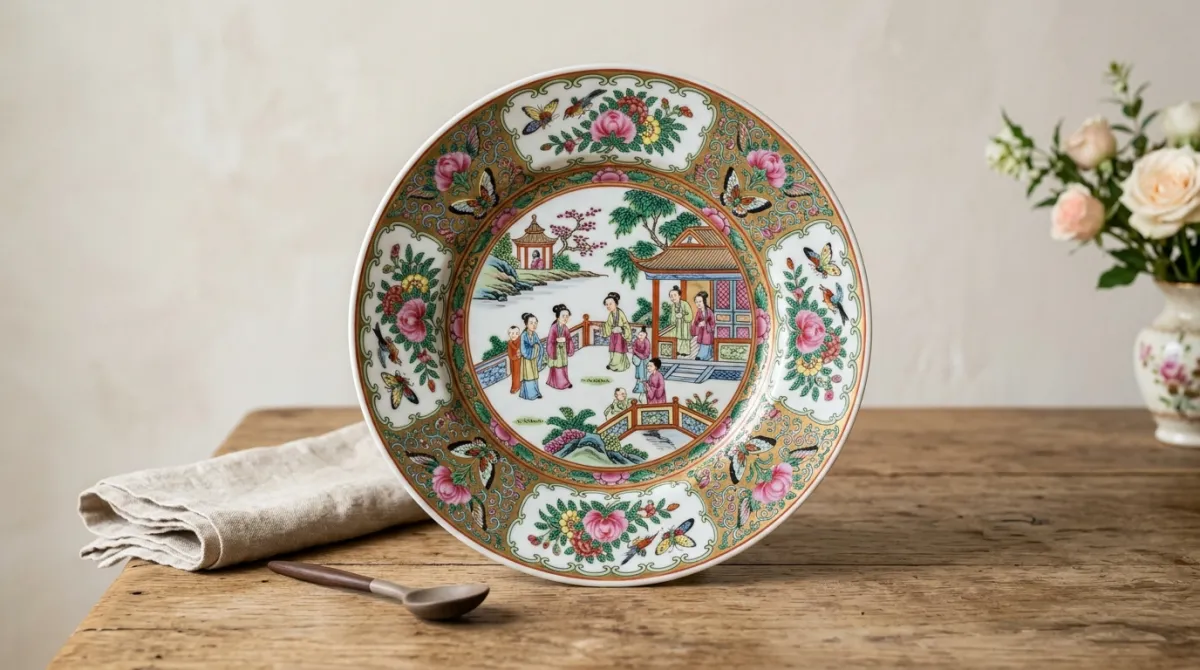
Kwok paints these commissions at GoodTime Studio Macau, working from historic Rose Medallion motifs, family requests, or a client’s own reference photos. The look stays true to the tradition. The materials underneath it don’t have to be a mystery, because they’re chosen and fired to be used, not just displayed behind glass.
If you’ve fallen for the look of antique famille rose but want a set you can serve dinner on without a second thought, that’s a reasonable thing to want, and it’s exactly why we started taking custom commissions in the first place.
Frequently asked questions
Can I eat off antique Rose Medallion?
We’d treat it as display ware by default. Overglaze enamels and gilding on antique famille rose pieces can contain lead, so the safer everyday habit is admiring the piece rather than serving food on it, especially anything acidic or hot.
Does antique china really contain lead?
It can. Overglaze enamels and gilt historically used lead compounds to fuse at low firing temperatures. You can’t confirm the presence or amount without lab testing, which is exactly why caution, not assumption, is the sensible default.
Is blue and white safer than famille rose?
Generally yes, since underglaze cobalt gets sealed beneath the glaze during firing rather than sitting exposed on the surface like overglaze enamel. Still, unknown-history antiques deserve caution regardless of pattern, particularly on the food-contact surface itself.
Do home lead test kits work?
They can flag a positive, but they mainly test the surface and can miss lead sealed under a clear layer. A professional lab test built for glaze and enamel analysis gives a far more reliable answer.
Can I get Rose Medallion that’s safe to actually use?
Yes. New custom hand-painted pieces can be made with modern food-safe glazes and enamels while keeping the traditional famille rose look, which is exactly the kind of commission work we build at GoodTime Studio Macau.
The bottom line
None of this means antique Rose Medallion isn’t worth owning, admiring, or building a collection around; it clearly is, and we say that as people who live surrounded by it. It just means the safest habit is simple: display the antiques, and if you want a set for the table, look at new work made with food safety in mind from the start. When you’re ready to see what that could look like for your own home, Rose Medallion dinnerware is a good next stop, whether you’re shopping for antiques to display or considering a custom piece to actually use.
Simon Iong writes about Rose Medallion history and care. Craft insight in this piece comes from Kerry Kwok of GoodTime Studio Macau, a working 廣彩 painter trained under master Lei Iat Po. This article is general guidance only and isn’t medical, legal, or laboratory advice.
Keep exploring
More from Rose Medallion
Identification, history, and care guides for Rose Medallion and Canton porcelain. New guides added regularly.
Explore all guides