commission
Custom Hand-Painted Porcelain Plates: How Commissioning Works
Key Takeaways
- A custom hand-painted plate makes sense when you want a specific size, a completed set, or a personalized dinner plate the antique market can’t supply.
- The process runs in four stages: you describe the idea, we confirm feasibility and price, Kerry Kwok hand-paints it at GoodTime Studio Macau, then it’s fired, finished, and shipped.
- Pattern, colour, size, border, and a personal element like a monogram or crest can all be adjusted, since nothing is mass produced.
- Hand-painting takes longer than a printed “personalized plate,” and small variation between pieces is normal, not a flaw.
- New commissions can be made to modern food-safe standards, which is a different situation from an antique plate best kept for display.
Who actually commissions a custom hand-painted plate?
Most people who reach out to Kerry Kwok fall into one of three groups: someone trying to complete an inherited or half-finished antique set, someone who wants a genuine Rose Medallion piece but can’t find the right size, and someone celebrating a wedding, anniversary, or milestone who wants a personalized dinner plate that means something specific to them.
None of these buyers are shopping for porcelain in the ordinary sense. They’ve usually already looked at what’s out there, whether that’s an antique dealer’s shelf or a big box store’s wedding registry, and come up short. A grandmother’s Rose Medallion service is missing three plates that simply don’t turn up for sale anywhere near a matching size or palette. A couple wants their initials worked into a border alongside the traditional court figures, which no antique plate was ever going to offer.
I’ve also had people commission a single plate purely as a keepsake, nothing practical about it at all, just a piece they wanted painted for a specific person or occasion. That’s a fair reason too. Not every commission needs a functional justification behind it.
If any of that sounds familiar, our guide to Rose Medallion is a good place to see the pattern family in full before you decide what you actually want painted.
How does the commission process actually work, step by step?
The process runs in four stages, starting with you describing the idea and ending with a finished plate shipped to your door. Kerry confirms feasibility, price, and a realistic timeline before any brush touches porcelain, so there’s no guessing involved on either side.
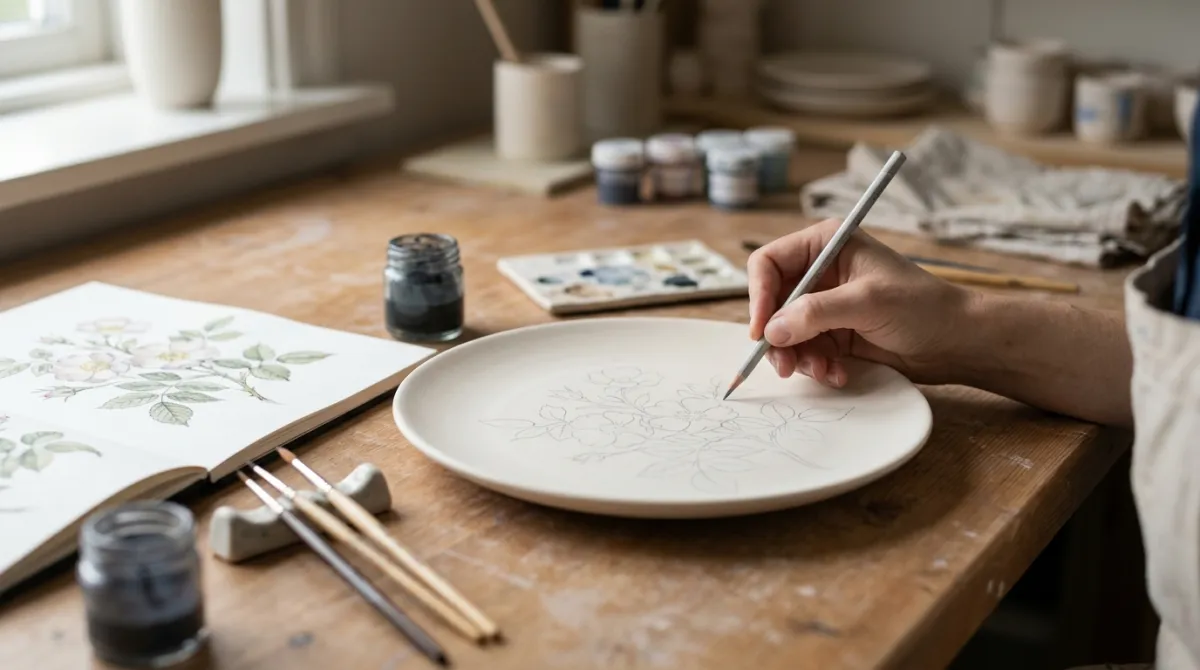
Step one: you share your idea. This can be as simple as “a Rose Medallion dinner plate like this photo” or as specific as a family crest, a wedding date, and a colour palette pulled from a bridesmaid’s dress. Size and occasion matter here too, since a charger meant for a wall display gets treated differently from a plate meant for daily use.
Step two: we quote and sketch. Kerry reviews what’s being asked for and tells you honestly whether it’s straightforward or genuinely tricky to paint. You’ll get a price range and a rough timeline before committing to anything, along with a reference sketch or example so you know roughly what to expect before painting starts.
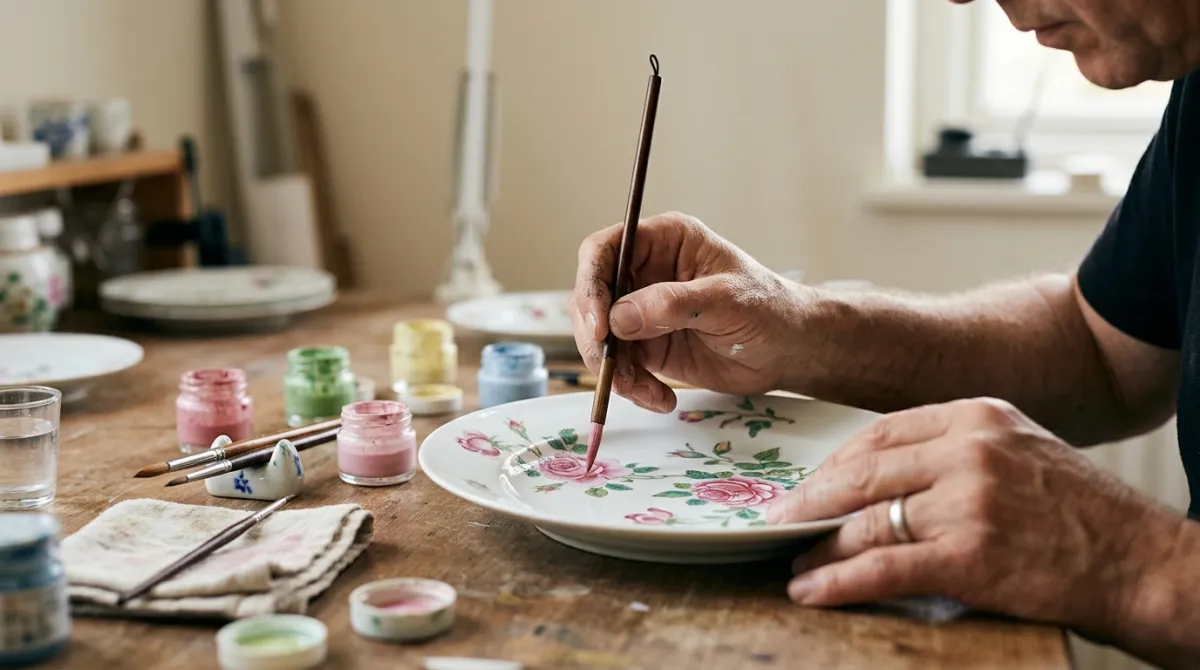
Step three: hand-painted in Macau. This is the part that actually takes time. Kerry paints the piece by hand at GoodTime Studio Macau, layer by layer, the same way traditional 廣彩 porcelain has always been painted, then it’s fired and finished.
Step four: shipped to you. Finished pieces are carefully packed and shipped worldwide. Given how far some pieces travel, we take packing seriously; this isn’t an afterthought tacked onto the end of the process.
If you want to start that conversation, the commissions page walks through the same steps with a direct way to reach the studio.
What can actually be customized on a hand-painted plate?
Pattern, colour palette, size and form, border treatment, and a personal element are all adjustable, because each piece is painted individually rather than pulled off a production line. That flexibility is really the whole point of commissioning instead of buying off the shelf.
Pattern is usually the first decision. Some buyers want a faithful Rose Medallion reproduction, alternating figures and florals around a central medallion. Others prefer Rose Canton’s all-floral reserves, or a Mandarin-style piece where court figures dominate the surface. If you’re not sure which one fits what you have in mind, our comparison of Rose Medallion, Rose Canton, and Mandarin breaks down what actually separates the three.
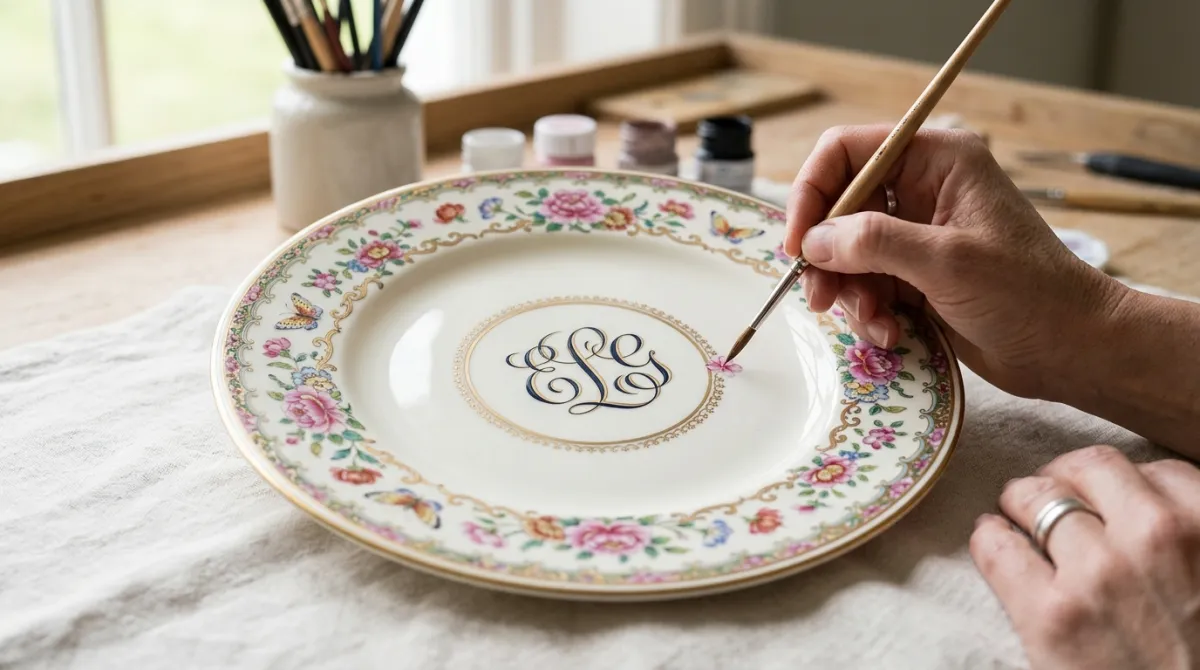
Colour and gilding can shift too, a warmer palette, heavier or lighter gilt banding, whatever suits the occasion. Size and form range from a small bread plate up through a full dinner plate to a large charger or platter, and we can match an existing set’s dimensions if that’s the goal. Border style is adjustable within reason, and a personal element, initials worked discreetly into a border panel, a family crest replacing a stock motif, a wedding date tucked into the design, can usually be incorporated without breaking the traditional look of the piece.
Not every request is possible on every pattern, to be honest. A crest that’s too intricate for the scale of a small plate might need simplifying, and Kerry will tell you that plainly during the quote stage rather than after painting has started.
How is a hand-painted commission different from a “personalized” printed plate?
A hand-painted plate is painted by a trained painter, reserve by reserve, while a printed “personalized dinner plate” from most gift sites applies a machine-generated image to a blank. The difference shows up in price, timeline, and in the small human variation you’ll see between two otherwise identical hand-painted pieces.
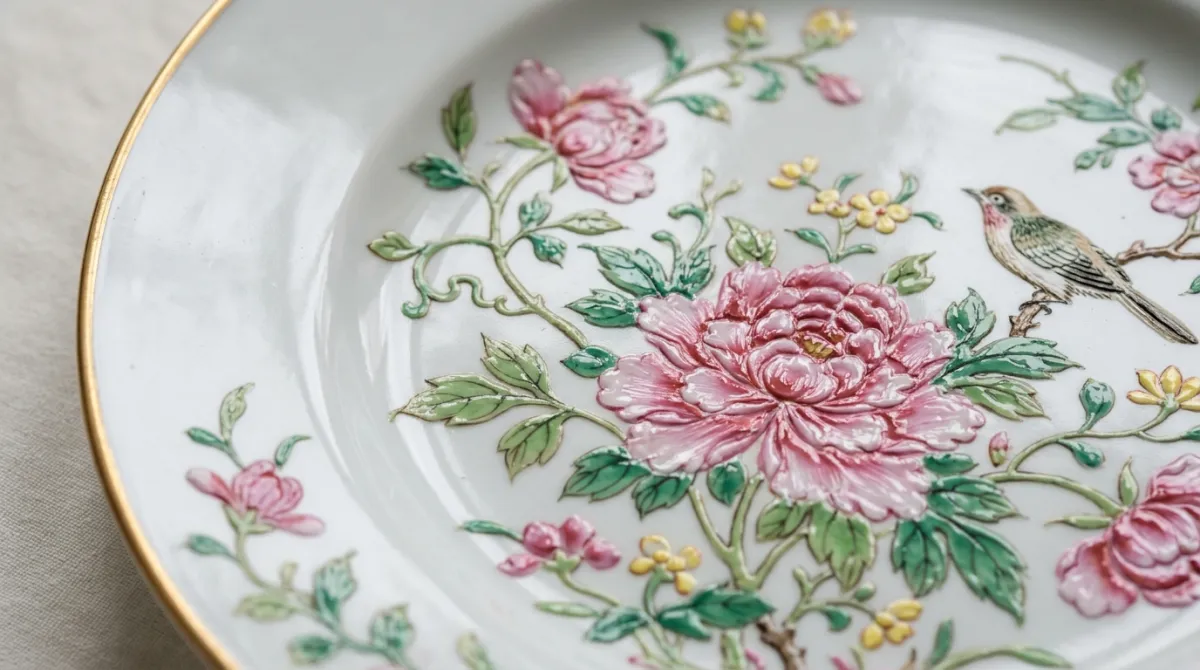
Printed plates exist because they’re fast and cheap to produce, often shipped within days. That’s genuinely useful if you need something quickly and don’t mind that it was made by a machine rather than a person. A hand-painted piece asks you to trade speed for something else: brushwork that follows the same tradition as antique Canton export porcelain, done by someone who trained for years under a master painter before ever picking up a commission on her own.
That trade-off means setting realistic expectations. Hand-painting takes real time, allow several weeks rather than days, since Kerry is painting one piece at a time rather than running a print job. It also means two plates from the same commission, if you order more than one, won’t be pixel-identical the way a printed run would be. A slightly different brush stroke here, a marginally different shade there, that’s the nature of something made by hand rather than a flaw to complain about. Most people who choose a hand-painted commission are choosing it precisely because of that human quality, not despite it.
Can a new plate actually be used at the table, or is it just for display?
New commissioned plates can be made to modern food-safe standards, which puts them in a genuinely different category from antique Rose Medallion. Antique pieces carry overglaze enamel and gilding that can contain lead and sit unfused on the glaze, so we treat them as display ware rather than everyday tableware.
That distinction trips people up sometimes, understandably. Someone falls in love with the look of an antique plate and assumes a new commission carries the same restrictions. It doesn’t have to. If you tell us upfront that you want a plate you’ll actually eat off, that requirement shapes the materials and finishing from the start, and Kerry can confirm exactly what’s been used once the piece is done.
If you’re weighing whether to restore or use an antique piece you already own instead of commissioning something new, our plate collector’s guide and our care guide cover how to handle antique porcelain safely, including when display-only really is the better call.
Frequently asked questions
How much does a custom hand-painted plate cost?
Pricing depends on size, complexity of the design, and how much gilding or figural detail is involved, so there’s no single flat rate we can quote in advance. Kerry reviews your idea and gives you an honest price range before any painting begins. The commissions page is the fastest way to get a specific quote.
How long does a commission take?
Turnaround depends on the piece and the studio’s current workload, but allow several weeks rather than a few days, since each plate is hand-painted individually rather than mass produced. We’ll give you a realistic timeline upfront so there are no surprises once you’ve committed.
Can you copy an antique plate I already own, or complete my set?
Yes, this is one of the most common requests we get. Send photos of the piece you already have, including close-ups of the reserves and border, and Kerry will assess how closely a match can be painted to complete or replace what you’re missing.
Can you make a personalized wedding or anniversary plate?
Yes. Monograms, wedding dates, family crests, or a colour palette pulled from the event itself can all be worked into a traditional Rose Medallion or Rose Canton layout. Tell us the occasion and any personal detail you want included when you first reach out.
Are custom plates food-safe?
New commissions can be made to modern food-safe standards if you let us know you intend to actually use the piece rather than display it. This is different from antique Rose Medallion, which we generally recommend treating as display-only rather than everyday tableware.
Where to go from here
A hand-painted commission won’t be antique, and we’ll never tell you otherwise, but it can be exactly the plate the antique market simply doesn’t have: the right size, a matching set, or a personalized dinner plate built around your own occasion. If that’s the gap you’re facing, start the conversation on the commissions page and tell Kerry what you have in mind.
Simon Iong writes about Rose Medallion history and commissioning. Craft insight in this piece comes from Kerry Kwok of GoodTime Studio Macau, a working 廣彩 painter trained under master Lei Iat Po.
Keep exploring
More from Rose Medallion
Identification, history, and care guides for Rose Medallion and Canton porcelain. New guides added regularly.
Explore all guides